Treadmills are the most popular cardio machines. Find out the basics to see if you should be running on one. [continue reading]
The post Treadmill Basics appeared first on Health & Fitness Experts.
Related Articles

A treadmill is the original cardio workout machine. It’s easy to use and gives you a great workout.
Treadmills have been around since the 1970′s and they are the most popular exercise machine.
Like ellipticals, they will give you a great cardiovascular workout.
What is a Treadmill?
Quite simply, they are running machines. Just like a moving sidewalk, an electric motor moves a wide belt and you must run or walk to stay in one place as the belt slides by underneath you.
Most treadmill models include an incline feature which allows you simulate running or walking uphill. This works slightly different muscles and allows you to increase the intensity of your exercise.
Treadmill Console
Treadmills also include an electronic console that allows you to set the speed, incline, and duration of your workout. The console also tracks the distance you run or walk and calculates your pace, calories burned, and other useful information.
Usually, the console also includes several predefined workouts that will automatically alter the speed and incline of your workout. These workouts target various goals, such as losing weight, burning fat, or building endurance.
Treadmills are Easy to Start
While some people may fear sliding off the end of the treadmill if they can’t keep up, treadmills are pretty easy to use.
They typically include a stop button that will stop the treadmill quickly. They also include an emergency stop key that you can attach to your clothing so that the treadmill will stop automatically before you can fall off the back.
Treadmills also include side rails to support you and keep you from falling sideways.
Treadmill vs. Elliptical Trainer
If you are considering using a treadmill, you might also be looking at elliptical trainers.

Thinking about using a treadmill? Wonder how it compares to an elliptical trainer? Read our article or watch our video: Elliptical vs. Treadmill: Which is Best?
The elliptical was designed as a low-impact alternative to the treadmill. Both machines provide an excellent cardio workout, but there are some important differences.
For a comparison of a treadmill vs. an elliptical, read our related article or watch our video:
Elliptical vs. Treadmill: Which is Best?
Have you tried a treadmill? Did you like it? How about an elliptical? Which do you like best? Let us know by leaving a comment below.
References & Sources: (show)(hide)
-
- “Blast Fat with Exercise Machines.”
- Men’s Health.
- Web.
-
- “Are elliptical machines better than treadmills for basic aerobic workouts?.”
- Mayo Clinic.
- Web. 4 June 2011.
-
- “The cardiopulmonary responses of elliptical crosstraining versus treadmill walking in CAD patients.”
- Journal of Exercise Physiology.
- 5.4 (Nov 2002).
- United States: American Society of Exercise Physiologists.
- Department of Exercise Science and Leisure Management, The University of Mississippi.
The post Treadmill Basics appeared first on Health & Fitness Experts.
Are you curious about elliptical trainers? Find out the basics so you can see if this cardio machine might be the right one for you. [continue reading]
The post What is an Elliptical Trainer? appeared first on Health & Fitness Experts.
Related Articles

An elliptical trainer gives you a great cardio workout. It was designed specifically to be easy on your joints.
Since their introduction in the 1990s, elliptical machines have become increasingly popular.
Ellipticals were designed specifically to provide a high quality cardio workout that’s also low impact and easy on your joints.
What is an Elliptical Trainer?
Like a strange marriage of a cross-country ski machine and a stair climber, elliptical trainers have foot pedals and moving arm handles that allow you to get a full-body workout, exercising both your arms and your legs.
They are sometimes called elliptical trainers, elliptical machines, or just plain “ellipticals.”
Basic Design
The arm handles are similar to ski poles and move at the same time as the pedals. Some models allow you to turn the arm handles off.
Elliptical trainers don’t have electric motors like a treadmill. Instead, they have a heavy flywheel with an adjustable tension strap that allows you to control how hard it is to pedal.
Getting Started is Easy
Ellipticals have a smooth, undulating, fluid motion and are relatively easy to use. For example, you need a much higher initial fitness level use a a cross-country ski machine, but you can start using an elliptical machine at any level.
It may take you a little while to get used to an elliptical. When you try one for the first time, the motion of the pedals and arms may feel rather strange. But you’ll get used to it quickly and it will start to feel very natural.
Elliptical vs. Treadmill
If you are considering using an elliptical, you might also have thought about trying a treadmill.
Thinking about using an elliptical? Wonder how it compares to a treadmill? Read our article or watch our video: Elliptical vs. Treadmill: Which is Best?
The treadmill is a close cousin of the elliptical. Both will give you a great cardio workout, but there are some important differences.
If you want a good comparison of an elliptical vs. a treadmill, be sure to read our related article or watch our video:
Elliptical vs. Treadmill: Which is Best?
Have you tried an elliptical? Did you like it? Let us know by leaving a comment below.
References & Sources: (show)(hide)
-
- “Elliptical Guide.”
- Consumer Reports.
- Web.
-
- “Are elliptical machines better than treadmills for basic aerobic workouts?.”
- Mayo Clinic.
- Web. 4 June 2011.
The post What is an Elliptical Trainer? appeared first on Health & Fitness Experts.
Related Articles

An elliptical and treadmill both burn the same number of calories. Your real calorie burn depends on your gender and weight. Be sure you’re calculating your true calorie burn.
Looking to find your calories burned on an elliptical trainer or treadmill?
Surprisingly, an elliptical and a treadmill both burn the same number of calories!
But be careful, you may not be accurately calculating your treadmill or elliptical calories burned. The real calorie burn depends on your gender and weight. Be sure you’re getting your true calorie burn!
The chart below shows the calories burned on an elliptical or treadmill for both women and men:
| Activity | Calories Burned | ||||||
|---|---|---|---|---|---|---|---|
| 115 lbs (52 kg) | 125 lbs (57 kg) | 140 lbs (64 kg) | 160 lbs (73 kg) | 180 lbs (82 kg) | 200 lbs (91 kg) | 220 lbs (100 kg) | |
| Treadmill running based on regular running, using a treadmill with 1 degree incline Calories based on an age of 35 and a height of 5 feet 9 inches (162 cm) Based on MET values from the “2011 Compendium of Physical Activities”, adjusted with the estimated RMR Harris Benedict equation. References and Sources | |||||||
| Women | |||||||
| Elliptical Trainer strong moderate effort | 319 | 364 | 436 | 536 | 641 | 750 | 862 |
| Treadmill Running 4 mph (13 min/mile) | 319 | 364 | 436 | 536 | 641 | 750 | 862 |
| Men | |||||||
| Elliptical Trainer strong moderate effort | 288 | 326 | 385 | 466 | 549 | 635 | 722 |
| Treadmill Running 4 mph (13 min/mile) | 288 | 326 | 385 | 466 | 549 | 635 | 722 |
Elliptical vs. Treadmill for Weight Loss?
If treadmills and elliptical both burn the same number of calories, is one better than the other?
That’s one of the top questions people ask when comparing treadmills and ellipticals — especially if they are trying to lose weight.

A treadmill feels more like real walking or running. It’s a great calorie burner.
Older studies did give the workout edge to treadmills, showing that they burned the most calories. However, more modern studies have shown that treadmills and ellipticals both give you the same exercise benefits.
For example, a University of Mississippi study found that elliptical workouts give you the same cardiovascular benefits as running on a treadmill. While test subjects initially got a more intense workout on ellipticals, researchers concluded that this was likely due to “holding on [too] firmly to the handrails, and possible nervousness with the motion of the elliptical.” They saw this effect wear off and “become non-existent with further… experience on the elliptical cross-trainer.”
Similarly, researchers from the University of Wisconsin at La Crosse took a look at the physiological responses of people using various types of fitness equipment and found that ellipticals provided “heart rate and oxygen consumption… similar to those achieved on a treadmill.” They concluded that “training on elliptical machines produces similar physiological improvements when compared to treadmill running… when volume and intensity are equivalent.”
In other words, both ellipticals and treadmills provide the same quality workout!
Ellipticals Provide a Full-Body Workout that Feels Easier
While the fitness results of both machines are the same, the workouts are not.

An elliptical burns the same number of calories as a treadmill. But it feels a little bit easier.
The elliptical gives you more of a full body workout because you use both your arms and your legs. Although you can carry weights and swing your arms while you run or walk on a treadmill, it’s not quite the same as having a “built-in” upper body workout.
An elliptical machine can also be pedaled in reverse so you can vary both the workout and the muscles that it targets. The treadmill allows you to adjust the incline and simulate hills, but that’s a less drastic shift in the muscles you target.
Finally, while the workout intensity and calorie burn is the same, psychological studies show that people feel that an elliptical workout is easier than a treadmill workout.
That perception that the workout feels easier might be the final motivation you need to get a solid workout. So for many people, an elliptical is a better choice.

An elliptical and treadmill both burn the same number of calories. Your real calorie burn depends on your gender and weight.
Elliptical vs. Treadmill: Find Out More
We get a lot of questions about ellipticals vs. treadmills.
If you want to find out more, check out our article on Elliptical vs. Treadmill: Which is Best?, which includes a great comparison video.
You can also find out more on our Elliptical vs. Treadmill Resource Page.
Do you use a treadmill or an elliptical? Have you tried them both? Which do you prefer? Let us know your experience by leaving a comment below.
References & Sources: (show)(hide)
-
- “2011 Compendium of Physical Activities.”
- Medicine and Science in Sports and Exercise.
- 43.8 (Aug 2011): 1575-8.
- Exercise and Wellness Program. School of Nutrition and Health Promotion. Arizona State University, Phoenix.
- www.ncbi.nlm.nih.gov/pubmed/21681120.
-
- “Elliptical Guide.”
- Consumer Reports.
- Web.
-
- “Blast Fat with Exercise Machines.”
- Men’s Health.
- Web.
-
- “Relative exercise intensity, heart rate, oxygen consumption, and caloric expenditure when exercising on various non-impact cardio trainers.”
- La Crosse, WI: University of Wisconsin.
- La Crosse Exercise and Health Program. University of Wisconsin at La Crosse.
-
- “Are elliptical machines better than treadmills for basic aerobic workouts?.”
- Mayo Clinic.
- Web. 4 June 2011.
-
- “The cardiopulmonary responses of elliptical crosstraining versus treadmill walking in CAD patients.”
- Journal of Exercise Physiology.
- 5.4 (Nov 2002).
- United States: American Society of Exercise Physiologists.
- Department of Exercise Science and Leisure Management, The University of Mississippi.
The post Real Calories Burned: Elliptical vs. Treadmill appeared first on Health & Fitness Experts.
What's the best workout: elliptical trainer or treadmill? Both burn the same number of calories. So the best one for YOU depends on your goals. [continue reading]
The post Elliptical vs. Treadmill: Which is Best? appeared first on Health & Fitness Experts.
相关文章
- 椭圆机vs.跑步机
- 椭圆机=“tab”>treadmill
- 雷竞技官网下载二手跑步机购买提示
- You are most interested in hiking or walking: you can save some money by buying a less expensive model.
- You are a serious runner or trying to become one: you’ll be able to log the miles you need, even when you can’t run outside.
- You are using it at home and have limited space: you could benefit from a folding treadmill.
- You need (or prefer) a low-impact workout that’s easier on your joints: an elliptical is lower impact.
- You want to include both an upper and lower body workout: an elliptical works more muscles.
- You think you’ll be more motivated because studies show an elliptical “feels easier” than a treadmill, even when you work out just as hard.
-
- “2011 Compendium of Physical Activities.”
- Medicine and Science in Sports and Exercise.
- 43.8 (Aug 2011): 1575-8.
- Exercise and Wellness Program. School of Nutrition and Health Promotion. Arizona State University, Phoenix.
- www.ncbi.nlm.nih.gov/pubmed/21681120.
-
- “Elliptical Guide.”
- Consumer Reports.
- Web.
-
- “Blast Fat with Exercise Machines.”
- Men’s Health.
- Web.
-
- “Relative exercise intensity, heart rate, oxygen consumption, and caloric expenditure when exercising on various non-impact cardio trainers.”
- La Crosse, WI: University of Wisconsin.
- La Crosse Exercise and Health Program. University of Wisconsin at La Crosse.
-
- “Are elliptical machines better than treadmills for basic aerobic workouts?.”
- Mayo Clinic.
- Web. 4 June 2011.
-
- “The cardiopulmonary responses of elliptical crosstraining versus treadmill walking in CAD patients.”
- Journal of Exercise Physiology.
- 5.4 (Nov 2002).
- United States: American Society of Exercise Physiologists.
- Department of Exercise Science and Leisure Management, The University of Mississippi.
-
伏特加中的碳水化合物以及如何保持低碳水化合物 //m.newsama.com/weight-loss-tips-carbs-in-vodka///m.newsama.com/weight-loss-tips-carbs-in-vodka/#comments 2013年5月3日星期五19:55:09+0000 快速有效的减肥秘诀雷电竞下载苹果 视频 //m.newsama.com/?p=3818 Worried about carbs in vodka? Good news: vodka has no carbs. But that's not the whole story. Use our tips to keep the carbs low. [continue reading]
The post Carbs in Vodka and How to Keep Them Low appeared first on Health & Fitness Experts.
There are no carbs in vodka. But there are definitely calories. And vodka cocktail mixers usually add a lot of carbs and can almost double the calories! So watch your mixers and count ALL the calories.
Watch the video (above) or read the article below for the details.Worried about the carbs in vodka?
First the good news: Vodka has zero carbs.
But that’s not the whole story. While there are no carbs in vodka, there are calories. And many mixers used in vodka cocktails are full of carbs and calories.
And to make things worse, your body burns the alcohol in vodka just like it burns carbs.
Let’s take a closer look at vodka carbs, and then we’ll give you some tips about low-carb and low-calorie vodka drinks.
The Low-Carb and Low-Calorie Vodka Myth
Not only are there are zero carbs in vodka, but vodka also doesn’t contain any meaningful amounts of protein or fat. Almost all the calories in vodka come from alcohol.
So if you are worried about the calories in vodka, don’t worry about the carbs. Instead, worry about the alcohol content, or proof. The higher the proof, the higher the calorie count.
(See our related article: Calories in Vodka and How You Can Minimize Them)
You may see advertising campaigns for low-carb or low-calorie vodka. But that’s a myth created by marketing people. Don’t let them fool you! All vodka has zero carbs, so all vodka is already “low-carb.”
And the only way to get low-calorie vodka is to lower the alcohol content. That’s why Smirnoff low-calorie vodka is only 60 proof (30 percent alcohol) instead of 80 proof (40 percent alcohol) like the regular Smirnoff.
They are charging you the same, but giving you 25% less alcohol. You’ll get the same “low-calorie” results by just using 25% less vodka in your drinks!
Alcohol in Vodka Has More Calories than Carbs!
It might sound like good news that vodka has no carbs. But the truth is that the alcohol in vodka has even more calories than carbs.
Alcohol has 7 calories per gram, while carbs have only 4 calories per gram. And just like carbs, your body burns alcohol before it burns fat. So if you are trying to lose weight, alcohol will delay fat burning and slow down your weight loss.
That’s why it’s important that you count the calories in your vodka drinks. This is especially important if you drink vodka cocktails.
How To Keep Your Vodka Drinks Low-Carb
Most people drink vodka combined with mixers in a vodka cocktail like a screwdriver, cosmopolitan, or a vodka tonic.

Vodka has no carbs. But the mixers are usually full of carbs AND calories. So watch out!
Unfortunately, the mixers used in many vodka cocktails are sugary and full of carbs. These mixers can often double the calories in your vodka drinks.
So if want to keep your cocktails low-carb and low-calorie, you really need to watch out for the mixers.
To help you out, we’ve included some helpful tips in our related article: Calories in Vodka and How You Can Minimize Them.
Health Benefits of Vodka?
The news about vodka isn’t all bad. There are actually some real health benefits to drinking vodka — as long as you drink in moderation!
The alcohol in vodka can benefit you in many ways, from boosting your cardiovascular health to boosting your brain power. You can find out more in our article on the Health Benefits of Red Wine and Alcohol.
Do you have a favorite vodka cocktail? Do you have your own tricks for keeping them low-carb and low-calorie? Share your own tips by giving leaving a comment below.
References & Sources: (show)(hide)
-
- “Alcohol and the Low-Carb Myth.”
- Wellness Letter.
- Aug 2004.
- Berkeley, CA: University of California, Berkeley.
- School of Public Health. University of California, Berkeley.
-
- USDA National Nutrient Database for Standard Reference, Release 24.
- Washington: GPO,
- 30 March 2012.
-
- Dietary Guidelines for Americans, 2010.
- 7th Edition.
- Washington: GPO,
- December 2010.
The post Carbs in Vodka and How to Keep Them Low appeared first on Health & Fitness Experts.
-
-
伏特加中的卡路里以及如何将其降至最低 //m.newsama.com/calories-in-vodka///m.newsama.com/calories-in-vodka/#comments 2013年4月28日星期日05:06:16+0000 卡路里 视频 //m.newsama.com/?p=2474 How many calories in vodka? About 97 per shot or jigger -- although it depends on the proof. (See the chart for details.) But be careful or you'll get many more calories than you expected! Read our tips to help you keep it low-calorie. [continue reading]
The post Calories in Vodka and How You Can Minimize Them appeared first on Health & Fitness Experts.
There are 97 calories in a shot or jigger of vodka. But mixers can double the calorie count. Use our tips to keep your vodka calories low!
How many calories in vodka? About 97 calories per shot or jigger — although it depends on the proof. (See the chart below for the calorie details.)
But be careful with your mixers, or you’ll get many more calories than you expected!
Our tips (below) will help you keep your vodka low-calorie. But first, let’s take a closer look at the source of vodka calories and explain why all vodka is created equal — at least when it comes to calories.
The Calories in Vodka Depend on the Proof
Almost all the calories in vodka come from the alcohol, so it doesn’t matter what brand of vodka you are drinking.
Calories* in VodkaFor Varying Serving Sizes and Proofs Vodka Proof** Calories 1 oz (30 ml) 1 shot or jigger
1.5 oz (44 ml)* Calories do not include cocktail mixers, which can add a lot
of calories. See below for more info.
** Proof is double the percentage alcohol by volume. For example,
80 proof = 40% alcohol.
References and Sources60 Proof 50 75 70 Proof 56 85 80 Proof 64 97 86 Proof 70 105 90 Proof 73 110 94 Proof 76 116 100 Proof 82 124 But what does matter is the proof!
Proof refers to the percent of alcohol in the vodka. Proof is defined as twice the percentage of alcohol by volume. Most vodka sold in the U.S. is 80 proof, which is 40% alcohol. But specialty vodkas can range from 60 – 100 proof.
So just how many calories are there in vodka? Well, a standard 1.5 oz (44 ml) shot or cocktail jigger of 80 proof vodka has 97 calories.
Take a look at our Vodka Calories Chart to see the calories for different vodka proofs and amounts.
But (of course), it’s not quite that simple because most people drink their vodka in a cocktail or a mixed drink…
Counting Calories? Watch Out for the Mixers!
When you add vodka to a cocktail, your 97 vodka calories can quickly rise to 150 calories — or much more if you are getting really fancy drinks. Mixers are often very high in sugar and calories, so be cautious!

How many calories in vodka? About 97. But watch out for the mixers — they can double your vodka calories!
For example, tonic is one of the most common mixers. But Canada Dry Tonic water is full of high fructose corn syrup. So every ounce adds 2.9 grams of sugar and 11 calories. That boost the calories of your Vodka Tonic cocktail from 97 to 147 calories.
How about mixing your vodka with Ocean Spray 100% Juice Cranberry to make a Cape Codder? That’s 4.5 grams of sugar and 17.5 calories per ounce, and it will boost your cocktail to 185 calories. Ouch!
So what can you do? Be wise about the mixers you use…
Low-Calorie Vodka Cocktail Tips
Although low-calorie vodka is a myth, low-calorie cocktails are definitely not. As we said, the mixers in a cocktail can double or even triple the calories. But here are a few tips to keep the calories under control.
Use Club Soda Instead of Tonic
Most tonic waters are full of high fructose corn syrup. Try club soda instead — it’s got zero sugar and zero calories. But it also has zero taste and zero sweetness. Read on if you need something to sweeten things up a bit.
Use Just a Splash of Fruit Juice
If you want to add some flavor and a little sweetness, use a splash of fruit juice. But avoid juices that have extra sugar added. And don’t add too much fruit juice. Even if it’s 100% juice, it’s likely to be high in calories. And when you are drinking juice, you don’t get the full benefit of the fiber, vitamins, and antioxidants that you’d get if you ate the fruit whole.
Try Agave Nectar
Agave nectar is a natural sweetener that comes (of course) from the agave plant. It’s been more famous as the plant used to make tequila. But it also makes a good natural sweetener because it makes your taste buds think it’s sweeter than sugar — so you can use less of it. It tastes about 50% sweeter than sugar, so you can typically substitute any sugar with half to two-thirds the amount of agave nectar.
It’s still got carbs in it, so this is not a sugar-free substitute. But it’s got only about 3 calories per gram compared to 4 calories per gram for sugar. And you can use 50% – 75% less of it to get the same sweetness as sugar. So it can really save some calories.
You Might Try Truvia or Stevia?
Sweeteners like Truvia that are made from the stevia plant might be a good alternative. But we haven’t done our research on this yet, so we can’t yet recommend them.
These sweeteners boast that they are natural and that they have zero carbs and zero sugar. That sounds good, but typically it’s not good to trick your body. If your taste buds think they are getting sugar, it will kick off several biological reactions. But there can be some negative consequences when the sugar never arrives.
We’ll add an update here once we’ve taken a closer look at stevia.
Health Benefits of Vodka (When you Drink in Moderation!)

Vodka has 97 calories. Vodka also has health benefits – but only when you drink in moderation.
It’s unlikely that you are drinking vodka just because you want to be healthy. But you may not know that drinking vodka actually has quite a few health benefits, from boosting your cardiovascular health to boosting your brain power.
The key is that you drink in moderation! If you drink in excess, then any alcohol becomes very bad for your health.
Find out more in our article Health Benefits of Red Wine and Alcohol
Do you have some tips or recipes for your own low-calorie vodka cocktails? Do you have an opinion on agave nectar, Truvia or stevia? We’d love to hear it, so leave a comment below.
References & Sources: (show)(hide)
-
- “Agave Syrup May Not Be So Simple.”
- The Wall Street Journal.
- 27 October 2009.
- New York: Dow Jones & Company, Inc.
-
- USDA National Nutrient Database for Standard Reference, Release 24.
- Washington: GPO,
- 30 March 2012.
-
- Dietary Guidelines for Americans, 2010.
- 7th Edition.
- Washington: GPO,
- December 2010.
The post Calories in Vodka and How You Can Minimize Them appeared first on Health & Fitness Experts.
-
-
鳄梨酱有多少卡路里? //m.newsama.com/calories-in-guacamole///m.newsama.com/calories-in-guacamole/#comments 2013年4月4日星期四17:45:41 +0000 卡路里 //m.newsama.com/?p=3314 You'll get 50 calories in one golf-ball-sized scoop of guacamole. It's high in calories, but good for your heart. So eat up, but watch your portion size! [continue reading]
The post How Many Calories in Guacamole Dip? appeared first on Health & Fitness Experts.
Related Articles

You’ll get about 50 calories in each golf-ball sized scoop of guacamole. It’s tasty and good for your heart. But watch your portion size, since even healthy can calories make you fat.
Guacamole is both tasty and healthy. You’ll get 50 calories in one golf-ball-sized scoop.
But while there’s a lot of fat and calories in guacamole, it’s very good for your heart health. So eat up, but watch your portion size!
The chart below shows the calories in guacamole for several types and sizes of this yummy avocado-based dip.
Guacamole Calories Guacamole Type &
QuantityCalories
(kcal)Weight
(g)Total Fat
(g)Total Carbs
(g)Dietary Fiber
(g)Sugars
(g)Protein
(g)References and Sources 1/2 Cup Guacamole Homemade Guacamole (onions & tomatoes) 189 118 17 9 5.7 0 2.3 Costco (Avotech) Guacamole 180 123 18 8 4 0 3 Wholly Guacamole (organic) 240 124 20 12 8 0 4 Wholly Guacamole (spicy) 200 122 20 12 8 0 4 Wholly Guacamole (classic) 240 113 20 12 8 0 4 1 Ounce Guacamole (about a golf ball sized scoop) Homemade Guacamole (onions & tomatoes) 45 28 4 2 1.4 0 0.5 Costco (Avotech) Guacamole 45 31 4.5 2 1 0 1 Wholly Guacamole (organic) 60 31 5 3 2 0 1 Wholly Guacamole (spicy) 50 31 5 3 2 0 1 Wholly Guacamole (classic) 60 28 5 3 2 0 1 Heart-Healthy Fat and Calories in Guacamole
You’ll see from the chart that guacamole is high in calories. And most of these calories come from fat.
Normally, we’d recommend avoiding high-calorie and high-fat foods. But in this case, the fat is from avocados and it’s monounsaturated fat. That’s the super healthy, good for your heart kind of fat.
Indulging in some guacamole is a very healthy choice. Just watch your portion size and don’t eat too much. Remember that even healthy calories can make you fat.
80 Million Pounds of Guacamole in One Day!
Guacamole is great to enjoy any day. (Some would say every day!)
In the U.S., the two biggest days for eating guacamole are Super Bowl Sunday and Cinco de Mayo. While Cinco de Mayo used to be the clear winner, Super Bowl parties now compete very closely with the May 5th celebration of Mexican pride and heritage.
For the 2013 Super Bowl XLVII, Americans wolfed down 79 million pounds of avocados, almost all of it in the form of guacamole. That’s about 158 million avocados!
But Cinco de Mayo proved it’s still the biggest day for serving (and eating!) guacamole. In 2012, the California Avocado Commission estimated that Americans across the country ate about 81 million pounds of guacamole — that’s about 162 million avocados.
Super Quick and Easy Guacamole Recipe
Want to whip up some guacamole in a hurry?
Mash some avocados, add some lime juice (to keep them from turning an unappetizing brown), and mix in some of your favorite jarred salsa.
Then grab a bag of tortilla or pita chips and you’re ready to go.
Tip: Frozen avocados work great for guacamole. Check out our article about saving money by freezing your avocados: How to Freeze Avocados: Quick and Easy!

Do you have a good guacamole recipe? Leave a comment and let us know!
How Do You Like Your Guacamole?
There are tons of great ways to enjoy guacamole.
The most common is certainly served as a dip with tortilla chips. But you can also spread it on a sandwich or burger, add it to your salad, or spread it on some plain toast.
How do YOU like to eat guacamole? Do you have a favorite guacamole recipe? Share it by leaving a comment below.
References & Sources: (show)(hide)
-
- “Avocado Consumption During Super Bowl Has Grown Significantly In Past Decade”
- The Huffington Post.
- 31 January 2013.
-
- “Celebrate Cinco de Mayo with California Avocados”
- California Avocado.
- Irvine, CA: The California Avocado Commission.
- 11 April 2012.
-
- USDA National Nutrient Database for Standard Reference, Release 24.
- Washington: GPO.
- 30 March 2012.
-
- Dietary Guidelines for Americans, 2010.
- 7th Edition.
- Washington: GPO.
- December 2010.
The post How Many Calories in Guacamole Dip? appeared first on Health & Fitness Experts.
-
-
绿茶对健康的益处:事实与虚构 //m.newsama.com/health-benefits-green-tea///m.newsama.com/health-benefits-green-tea/#comments Sun, 31 Mar 2013 02:46:58 +0000 健康福利 视频 //m.newsama.com/?p=2648 Green tea is full of health benefits. But not everything you've heard is true. We'll summarize the research and show how YOU can get the real benefits of green tea. L竞技
The post L竞技 appeared first on Health & Fitness Experts.
相关文章
- 绿茶健康益处
- 绿茶咖啡因和038;卡路里
- 绿茶减肥/li>/ul>
欢迎来到健康和健身专家视频系列。我是弗朗西斯,今天我们要谈谈绿茶对健康的许多好处。绿茶对健康有益。但并非你所听到的一切都是真的。从预防癌症到增强记忆力,再到帮助你减肥,我们将关注一些关于绿茶的事实和虚构。我们还将告诉您如何最大限度地发挥绿茶的功效。那么’;让我们进去看看。首先,为什么绿茶如此健康。嗯,所有的非草药茶都是由同一种茶树制成的。但与其他茶叶不同的是,用于制作绿茶的茶叶在干燥前不会发酵。这最大限度地提高了茶叶中天然抗氧化剂的含量。研究表明’;这些抗氧化剂提供绿茶的健康益处。现在我们知道为什么了’;It’他太健康了,让’;让我们来看看gre的一些具体好处en tea. The claim that you’ve probably heard of the most is that green tea can help prevent cancer. Actually there have been a ton of studies done to look specifically at this claim. Lab experiments done in test tubes or with mice have shown some very promising results. Unfortunately, there is no compelling evidence that this is true in humans. In fact, neither the National Institute of Cancer nor the American Cancer Society recommends using green tea to fight or prevent any kind of cancer. But don’t give up on your green tea just yet. Green tea is full of many incredible health benefits. So let’s take a look at some of them right now. Studies have shown the green tea is great for your cardiovascular health. For example, drinking green tea will help lower your bad cholesterol without hurting your good cholesterol. And it will help lower your risk of developing high blood pressure and lower your risk of both heart attack and stroke. But that’s not all. Let’s take a look at some of the other reasons you should be drinking green tea. Drinking green tea will also help you lose weight because it boosts your metablolism and helps you burn more calories. In fact, it will actually trick your body into burning more fat. Now that’s a benefit we can all appreciate! But there’s still more, so let’s take a look. While more research is needed, studies have shown some very promising benefits of green tea in several other areas. For example, researchers believe that green tea can help boost your memory and help prevent age related mental decline from dementia and diseases like Parkinson’s and Alzheimer’s. Researchers also believe that green tea can help prevent type two diabetes and even help prevent the flu. And some studies have shown the green team likely helps boost your exercise endurance so that you can get even more out of your workouts and boost your calorie burn. So, how can you get all these great benefits out of green tea? Luckily, that’s very simple. All you need to do is drink three to four cups of green tea each day. Now, a lot of people ask if they can take supplements instead of drinking green tea. Some studies have shown very promising results from supplements, but we still recommend that you drink your green tea instead. And that’s because all the large human studies have been done on populations that are drinking their green tea, not people that are taking supplements. So we think that’s the most likely way to maximize the benefits that you can get from green tea. Personally, I try to drink three or four cups of green tea every day. That’s if for this episode. But you can find out more information about the benefits of green tea on our Health and Fitness Experts website. You’ll also find a ton of very useful nutrition and health info on a wide range of topics. Thanks for watching.Green tea probably won’t prevent cancer. But there are many other health benefits of green tea. Drink 3 or 4 cups per day and you’ll burn more fat, lose weight, lower your cholesterol, and boost your workout endurance. Go brew a cup right now!
Green tea is full of health benefits. But not everything you’ve heard is true.
Green tea has been used as a medicine for thousands of years in China. Now it’s also become very popular in the west. But are there really any health benefits in green tea?Yes, absolutely!
In the last 10 years, researchers from around the world have published over 3,500 studies looking at the benefits of green tea. And many studies do show that green tea is full of health benefits!
Look at the table below to separate the fact from the fiction, and continue reading to get the details.
Green Tea Health Benefits:
Facts and FictionsHealth Benefit Is It True? More Info References and Sources Lower Your Bad Cholesterol yes details Reduce Heart Disease Risk yes details Lower Risk of High Blood Pressure yes details Fight Cancer probably not details Burn Fat and Lose Weight yes details Prevent Type 2 Diabetes probably details Anti-Aging Skin Protection maybe details Prevent the Flu probably details Boost Memory and Prevent Dementia, Alzheimer’s and Parkinson’s probably details Prevent Cavities and Gum Disease yes details Improve Exercise Endurance probably details What Makes Green Tea So Healthy?
So, why is green tea so healthy in the first place? And why is it any better than other teas?
All tea — except for herbal tea — is made from the same plant: Camellia sinensis. But unlike black or oolong tea, green tea leaves are not fermented before they are dried. This gives it very high concentrations of the naturally occurring, powerful antioxidants that are found in the fresh leaves of the tea plant.
The most abundant antioxidant in green tea is a catechin called epigallocatechin-3-gallate (EGCG). It’s the EGCG antioxidant that gives green tea most of its health benefits, and that’s the specific ingredient that’s gotten the most attention in scientific studies.
Some of the health benefits also come from other compounds, like naturally occurring caffeine and other antioxidants. And in some cases, researchers have found that the combination of EGCG with caffeine and other ingredients provide more health benefits than the EGCG alone.
So, it’s good for you. But exactly what are all the health benefits of green tea? Continue reading and we’ll look at each benefit in detail.
Green Tea Lowers Your Bad Cholesterol
Research shows that drinking green tea helps lower your bad (LDL) cholesterol without hurting your good (HDL) cholesterol. That’s great news for your cardiovascular health!
This finding is backed up by many studies. For example, University of Oklahoma researchers looking at the effects of green tea on 35 obese patients found that drinking 4 cups of green tea per day lowered their LDL cholesterol. It also helped them lose weight and lower their BMI!
Looking at larger studies of more general populations, research published in a 2011 edition of the American Journal of Clinical Nutrition found the same results. Chinese researchers performed an analysis of 14 prior studies with 1,136 subjects and concluded that drinking green tea or taking green tea supplements “resulted in significant reductions in LDL-cholesterol concentrations.” And they found no effect on HDL (good) cholesterol.
Reduce Risk of Dying From Heart Attack or Stroke
Lowering your risk of cardiovascular disease is yet another one of the many green tea benefits.
A large Japanese study found that drinking at least 5 cups of green tea per day reduced the risk of dying from cardiovascular disease by 26 percent! More specifically, heart attack risk was reduced by 14 percent and the risk of stroke was reduced by a whopping 37 percent.

Drinking green tea every day reduces your risk of dying from a heart attack or stroke.
The results were actually much better for women than for men. Women cut their risks of heart attack and stroke by 23 percent and 42 percent, respectively, while men cut their risks by only 9 percent for heart attacks and 35 percent for strokes.
The study, published in 2006, followed over 40,000 subjects in northeastern Japan for up to 11 years. Sometimes studies such as this can give misleading results because there may be other factors — called confounding variables — that contribute to the perceived benefits.
For example, green tea drinkers in the U.S. are likely to be more health conscious than non-tea drinkers, so in addition to drinking green tea, they likely also make other healthy choices that are also likely benefit their health.
That makes it hard to know if their improved health is caused by the health benefits of green tea or caused by something else they are doing.
However, the Japanese study is important because over 80 percent of the population in northeastern Japan drinks green tea. So, it’s unlikely that the study participants were intentionally drinking green tea for their health, and all participants were equally likely to have similar diets. So there is a smaller risk of confounding factors that might unintentionally skew the results.
This same concept of “confounding variables” may also explain why women got greater benefits than men. The men were much more likely to smoke than the women, and smoking increases the risk of heart attack and stroke.
Lowers Risk of High Blood Pressure
Helping you avoid high blood pressure may be one of the ways that green tea reduces your risk of dying from heart disease. Although more research is needed to confirm the findings, studies show that drinking even a small amount of green tea significantly reduces your risk of developing hypertension (another name for high blood pressure).
Researchers in Taiwan studied over 1,500 adult subjects and found that the risk of developing high blood pressure dropped by 46 percent for people who drank half a cup of green tea per day for at least a year. Study participants who drank two and half cups of green tea per day saw a 65 percent decrease! There was no additional gain for subjects who regularly drank green tea for more than one year. (So start today!)
As with many human studies, confounding variables such as lifestyle choices and eating habits can skew the results. However, the Taiwanese researchers adjusted for a wide range of confounding factors including “age, sex, socioeconomic status, family history of hypertension, body mass index, waist-hip ratio, lifestyle factors (total physical activity, high sodium intake, cigarette smoking, alcohol consumption, and coffee drinking), and dietary factors (vegetable, fruit, unrefined grain, fish, milk, visible-fat food, and deep fried food intake).” That makes this study quite comprehensive.
So, while more studies with larger populations are required to confirm these results, it looks very likely that drinking green tea lowers your risk of developing high blood pressure.
Does Green Tea Fight Cancer?
Can green tea help prevent or fight cancer? This is one of the most popularized health benefits of green tea. Many studies have looked into green tea’s cancer fighting properties, and some studies have actually found very positive results.
Unfortunately, most research has been conducted in the laboratory using mice, rats, or test tubes — but not humans. So, while the results are promising, currently there is no compelling evidence that green tea really fights or prevents cancer in humans.

Green tea leaves are packed full of powerful antioxidants that help keep your healthy. The most important one is a catechin called EGCG.
In the laboratory, green tea has been found to prevent or fight a wide range of cancers occurring in many organs including the colon, esophagus, stomach, small intestine, liver, pancreas, breast, prostate, lung, and skin. Both animal and test tube studies show that EGCG and other compounds in green tea have the ability to attack pre-cancerous cells, cancer cells, and related proteins, thereby preventing, slowing down, or even killing cancer cells.
Unfortunately, human studies have not been conclusive. For example, the large, comprehensive 2006 Japanese study mentioned above found that green tea had no effect on colorectal, gastric or lung cancer. A few other human studies have shown some cancer benefits in humans for stomach, prostate, breast, lung, and other cancers, but those studies have generally been smaller, less reliable, and more prone to confounding factors.
Many researchers think the discrepancy between the laboratory and human studies is due to dosage and delivery. The laboratory studies on animals tend to use very high doses of the EGCG catechin or green tea extracts, sometimes using intravenous injections. And the test tube studies usually apply the EGCG or green tea directly to the organ cells. In real life, it would be very difficult (and possibly unhealthy) to consume enough green tea to match these levels and deliver the EGCG to the affected organs.
While promising results have been seen in the lab, the verdict is still out and further study on humans is needed. Currently, neither the National Cancer Institute nor the American Institute for Cancer Research recommend drinking green tea to fight or prevent any kind of cancer. But, they also don’t recommends avoiding green tea. So while it may not help fight cancer, you should feel free to drink it for all the other green tea health benefits.
Green Tea Helps You Lose Weight
Numerous studies have shown that green tea boosts your metabolism and helps you burn fat and lose weight. You’ll only lose about one pound per month, but that’s twelve pounds a year, which is pretty good.
This is a popular topic, so we’ve written an entire article that goes into all the details about this surprising green tea benefit: How To Use Green Tea For Weight Loss.
Green Tea May Help Prevent Type 2 Diabetes
While the evidence is not yet conclusive, it seems likely that green tea can help prevent type 2 diabetes. Several laboratory studies in both test tubes and mice have shown that the compounds in green tea can help regulate glucose levels and may therefore help prevent diabetes.
The results of human studies are not as clear. However, in 2009, Chinese researchers analyzed the results of nine previous human studies that involved over 324,000 subjects over a period ranging from 5 to 18 years. The study concluded that “participants who drank four or more cups of tea per day had a 20% lower risk of type 2 diabetes compared with those who drank less or none.”
The researchers warned that the study had some limitations and they suggested that more research on humans was needed to confirm a positive link between green tea and a lowered risk of type 2 diabetes. But these initial findings are very encouraging.
Anti-Aging Skin Protection From Sun Damage
Studies suggest that drinking green tea will actually help protect your skin from the damage and aging caused by exposure to the sun’s UV radiation. The catch? You’d need to drink eight to twelve cups of tea each day, which might be unhealthy for you.
In study published in a 2011 edition of The Journal of Nutrition, German researchers gave 60 female volunteers either a drink with a massive dose of green tea catechins or a placebo beverage. The women were exposed to simulated sun UV rays.
After 12 weeks, the women who got the green tea drink had 25 percent less skin reddening than those that got the placebo. And, they had noticeably improved skin, including less roughness and scaling and more elasticity, density, moisture, and blood flow.

More research is needed. But initial results show that green tea may lower your risk of getting the flu. And it may help fight the signs of aging caused by sun exposure.
The only problem with the study is the massive dose of green tea catechins that they used — roughly eight to twelve cups worth of green tea. Most studies recommend three to four cups of green tea per day, so it’s possible that drinking ten to twelve cups may have negative long term health effects.
In this case, more study is needed to see if lower, more reasonable doses of green tea have the same anti-aging, sun-protection benefits for your skin.
Green Tea Can Prevent the Flu
Previous laboratory studies have shown that the primary green tea catechin, EGCG, can dramatically slow down the spread of flu viruses in test tube experiments. And a recent study shows that drinking green tea can offer humans real protection from the flu.
In the study, Japanese researchers gave some healthcare workers daily green tea supplements equivalent to drinking three to four cups of tea. They tracked the workers for five months of flu season and counted the cases of influenza. Of the workers who got the supplements, only 4 percent got the flu, compared to 13 percent of workers who were given placebo.
That’s a 70 percent reduction in the risk of catching the flu! This study only involved about 200 people, so more research is needed here. But this looks like another one of the very promising health benefits of green tea. And once again, three to four cups of tea per day seems to be the magic number.
Brain Power: Boost Memory and Learning, Prevent Dementia, Alzheimer’s and Parkinson’s
Various studies suggest that drinking green tea can boost your brain power and help protect you from age-related mental decline, dementia, Alzheimer’s, and Parkinson’s disease. Many of these studies were done in test tubes or using mice, so some more research on human subjects is needed. But there have been a few human studies that show green tea benefits for your brain.
Laboratory studies have shown that green tea’s most abundant catechin, EGCG, helps prevent or counter many of the factors believed to cause age-related degenerative diseases in the brain. EGCG has been shown to protect brain cells by helping to remove iron and free radicals, promoting the activity of beneficial antioxidant enzymes, and reducing the formation of harmful proteins.
A Chinese study published in the August 2012 Molecular Nutrition & Food Research journal found that EGCG not only protects against degenerative mental diseases, but that it actually boosts learning and memory. Researchers treated mice with a daily dose of EGCG equivalent to about 16 cups of green tea. (Yes, that’s a lot!) They tested the mice and trained them to find objects in mazes.
The researchers found that the EGCG mice performed better and faster than untreated mice, and that their brains had increased the production of neural stem brain cells in the hippocampus. That’s the part of the brain that moves information from short-term to long-term memory, and explains why the mice had enhanced memory and improved learning.

Brain Power: early research suggests that green tea may boost memory and learning. It may also prevent dementia, Alzheimer’s, and Parkinson’s.
People are not mice, and no one should drink 16 cups of green tea each day. But the results are still very promising. And luckily, there are some human studies that show positive results from drinking more realistic amounts of green tea.
In one of the few human studies on this topic, Japanese researchers studied more than 1,000 subjects over the age of 70 and compared their self-reported green tea consumption with their state of mental capacity. Those who drank more than two cups of green tea per day had a 64 percent lower risk of suffering from mental decline than those who drank less than three cups per week. Wow!
Another human study that looked specifically at Parkinson’s disease found that people who drank three or more cups of tea per day had a 59 percent lower risk of developing the disease. The Finnish study looked at over 29,000 people over a period averaging almost 13 years, and it made adjustments for confounding factors such as age, BMI, and lifestyle choices. This study looked at tea in general, so even better results should be expected from drinking green tea, since it has a much higher concentration of antioxidant catechins.
So, while more research is needed on human subjects, it looks like green tea does boost your brain power and protect you from mental decline.
Green Tea and Oral Health
Believe it or not, green tea is even good for the health of your teeth and gums!
The EGCG catechin found in green tea has been shown to have strong antimicrobial properties, and it slows down and kills the bacteria that cause both tooth decay (cavities) and periodontal disease (gum disease).
And, green tea (and all non-herbal teas) contain fluoride, which dentists recommend to help fight cavities. Most studies show that green tea contains about the same amount of fluoride as that found in most U.S. public water supplies; although recent research at the Medical College of Georgia has shown that it may contain somewhat more fluoride.
Ingesting too much fluoride can cause bone loss. But drinking three to four cups per day will keep your fluoride intake well within safe levels, even at the fluoride levels found in the Georgia research. And, it will help keep your teeth and gums healthy!
Increase Exercise Endurance
Green tea also appears to boost your exercise endurance by causing your body to burn fat instead of carbohydrates.
During an aerobic workout like running, biking or swimming, you burn carbohydrates stored in your muscles. Lactic acid builds up in your muscles as these carbs are depleted. It’s the lactic acid that creates fatigue and makes your muscles sore.

Drinking green tea will likely boost your exercise endurance. The tea causes your body to burn fat instead of carbs, which delays your fatigue.
If you regularly drink three to four cups of green tea per day, the EGCG catechins in the tea help delay this lactic acid response by causing your muscles to burn more fat than carbs, and that boosts your exercise endurance. As a bonus, you are also burning more fat, which can help you lose weight!
(Read more about the weight loss benefits in our article How To Use Green Tea For Weight Loss)
Japanese researchers initially found these results by studying mice. They found mice increased their swimming endurance by 24 percent when they were regularly given green tea extracts. They found that running endurance increased by 30%. The researchers attributed the increased endurance to the green tea catechin’s ability to promote fat burning during exercise.
Although more detailed test are needed to confirm similar results in humans, a small 2011 study showed that green tea does have the same fat burning effects during exercise. Japanese researchers tested 12 healthy men and gave half of them daily green tea extracts equivalent to drinking about 3 cups. They confirmed that after moderately intense exercise, those who had the green tea had burned significantly more fat than the non-tea group.
How Much Tea Is In A Cup?
We keep talking about drinking three to four cups of tea each day. But how much tea is in a cup?
Cup size varies greatly from country to country. But when we say a cup of tea, we mean tea brewed with either one tea bag or about two grams of loose tea. The cup size doesn’t really matter. You can use less water for stronger tasting tea, or more water for lighter tea. But as long as you drink the whole cup, you’ll get the same amount of antioxidant catechins.
Do Green Tea Supplements Have the Same Health Benefits Brewed Green Tea?
Can you take green tea supplements instead of brewing and drinking green tea? Probably.
As we’ve said, the most important ingredient in green tea is the catechin EGCG. A study at UCLA took a group of 30 healthy people and gave them either liquid tea or green tea extract supplements. They found that both produced the same levels of EGCG in the subject’s blood.
We recommend brewing your own green tea to maximize your health benefits. While the research from many controlled experiments uses green tea extracts, most of the large human studies involve drinking freshly brewed green tea. So we think that’s the most reliable option. But if you prefer, based on the UCLA and other research, you’ll likely get the same health benefits from the supplements.
Just be sure you are buying quality supplements that have sufficient amounts of green tea extracts. As a guide, a cup of quality green tea has about 80 – 100 mg of EGCG, and about 200 mg of total catechins.
When You Should Avoid Green Tea
If you are sensitive to caffeine, you may want to avoid green tea. Green tea has only about one quarter the amount of caffeine as coffee, so four cups of green tea would have about the same amount of caffeine as one cup of coffee. That’s a safe amount for most people. But if have trouble sleeping, you should avoid green tea in the evening. And if you are very sensitive to caffeine, you should completely avoid green tea.
All tea (including green tea) also contains tannins which can prevent your body from absorbing the iron and folic acid found in the foods or supplements that you eat. So you should avoid drinking green tea if you are anemic (iron deficient), pregnant, or if you may get pregnant.
However, the iron absorption problem only occurs if you drink green tea during meals. You can minimize the problem if you also eat foods that enhance iron absorption, like vitamin C. So if you put some lemon in your tea or eat foods rich in vitamin C, iron absorption won’t be a problem. You’ll also eliminate the problem if you drink green tea only between meals — then it won’t affect your iron absorption.
Of course, if you are taking any medications or have any specific medical condition, you should check with your doctor before drinking green tea to confirm that there won’t be any negative interactions with your medication or illness.
And remember, you should limit yourself to three to four cups per day. That’s the right amount to reap all the health benefits.
Summing Up the Results

Green tea is full of life-extending health benefits. Drink 3 or 4 cups every day!
We hope we’ve convinced you that you should add three to four cups of green tea to your daily routine. While it may not help prevent cancer, you’ll enjoy all of the proven green tea benefits from lowering your bad cholesterol to boosting your brain power to losing weight.
It’s a zero calorie, high benefit drink that’s always a smart choice. So start brewing and drink up!
Do you drink green tea for its health benefits? Which ones? Do you think it works? We’d like to hear your experience. Please share it by leaving a comment below…
References & Sources: (show)(hide)
-
- “Green tea supplementation affects body weight, lipids, and lipid peroxidation in obese subjects with metabolic syndrome.”
- Journal of the American College of Nutrition.
- 29.1 (Feb 2010): 31-40.
- New York, NY: American College of Nutrition.
- Nutritional Sciences. Human Environmental Sciences. Oklahoma State University, OK, USA.
-
- “Beneficial effects of green tea–a review.”
- Journal of the American College of Nutrition.
- 25.2 (Apr 2006): 79-99.
- New York, NY: American College of Nutrition.
- Departamento de Nutrición y Bromatología. Facultad de Farmacia. Campus Universitario de Granada. Spain.
-
- “Green tea polyphenols provide photoprotection, increase microcirculation, and modulate skin properties of women.”
- The Journal of Nutrition.
- 141.6 (June 2011): 1202-8.
- Rockville, MD: American Society for Nutrition.
- Institute for Experimental Dermatology. University of Witten-Herdecke. Germany.
-
- “Bioavailability and antioxidant activity of tea flavanols after consumption of green tea, black tea, or a green tea extract supplement.”
- The American Journal of Clinical Nutrition.
- 80.6 (Dec 2004): 1558-64.
- Bethesda, MD: American Society of Clinical Nutrition.
- Center for Human Nutrition. David Geffen School of Medicine and the Department of Biostatistics. School of Public Health. University of California, Los Angeles.
-
- “Tea.”
- Micronutrient Information Center. Linus Pauling Institute. Oregon State University.
- Web. 22 July 2007.
- lpi.oregonstate.edu/infocenter/.
-
- “Coffee and tea consumption and the risk of Parkinson’s disease.”
- Movement Disorders.
- 22.15 (15 Nov 2007): 2242-8.
- New York: Wiley-Liss.
- Department of Health Promotion and Chronic Diseases Prevention. National Public Health Institute. Helsinki, Finland..
-
- “Effect of endurance training supplemented with green tea extract on substrate metabolism during exercise in humans.”
- Scandinavian Journal of Medicine & Science in Sports.
- 21.4 (Aug 2011): 598-605.
- Copenhagen: Munksgaard International Publishers.
- Faculty of Human Sciences. Waseda University. Japan.
-
- “Tea consumption and risk of type 2 diabetes: a meta-analysis of cohort studies.”
- Journal of General Internal Medicine.
- 14.5 (May 2009): 557-62.
- Secaucus, NJ: Springer.
- Department of Endocrinology. Drum Tower Clinical Medical College of Nanjing Medical University. China.
-
- “Green tea consumption and cognitive function: a cross-sectional study from the Tsurugaya Project 1.”
- The American Journal of Clinical Nutrition.
- 83.2 (Feb 2006): 355-61.
- Bethesda, MD: American Society of Clinical Nutrition.
- Division of Epidemiology. Department of Public Health and Forensic Medicine. Tohoku University Graduate School of Medicine. Sendai, Japan.
-
- “Green tea consumption and mortality due to cardiovascular disease, cancer, and all causes in Japan: the Ohsaki study.”
- The Journal of the American Medical Association.
- 296.10 (Sept 2006): 155-65.
- Chicago: American Medical Association.
- Division of Epidemiology. Department of Public Health and Forensic Medicine. Tohoku University Graduate School of Medicine. Sendai, Japan.
-
- “Effects of green tea catechins and theanine on preventing influenza infection among healthcare workers: a randomized controlled trial.”
- BMC Complementary and Alternative Medicine.
- 11.15 (Feb 2011).
- London: BioMed Central.
- Department of Drug Evaluation & Informatics. Graduate School of Pharmaceutical Sciences. University of Shizuoka. Japan.
-
- “Tea may contain more fluoride than once thought, research shows.”
- ScienceDaily.
- Web. 14 Jul 2010.
- www.sciencedaily.com.
-
- “Green tea extract improves endurance capacity and increases muscle lipid oxidation in mice.”
- American Journal of Physiology. Regulatory, Integrative and Comparative Physiology.
- 288.3 (Mar 2005): 708-15.
- Bethesda, MD: American Physiological Society.
- Biological Science Laboratories. Kao Corporation. Tochigi, Japan.
-
- “Green tea extract improves running endurance in mice by stimulating lipid utilization during exercise.”
- American Journal of Physiology. Regulatory, Integrative and Comparative Physiology.
- 290.6 (Jun 2006): 1550-6.
- Bethesda, MD: American Physiological Society.
- Biological Science Laboratories. Kao Corporation. Tochigi, Japan.
-
- “Antimicrobial properties of green tea catechins.”
- Food Science and Technology Bulletin.
- 2 (2005): 71-81.
- Reading: International Food Information Service.
- Microbiology Group School of Pharmacy. London.
-
- “Tea and health.”
- Nutrition Reviews.
- 58.1 (Jan 2000): 1-10.
- Washington, DC : International Life Sciences Institute.
- Banting and Best Institute of Medical Research. University of Toronto. Canada.
-
- USDA National Nutrient Database for Standard Reference, Release 24.
- Washington: GPO.
- 30 March 2012.
-
- Tea and Cancer Prevention: Strengths and Limits of the Evidence.
- Washington: GPO.
- 17 November 2010.
-
- “Green tea epigallocatechin-3-gallate (EGCG) promotes neural progenitor cell proliferation and sonic hedgehog pathway activation during adult hippocampal neurogenesis.”
- Molecular Nutrition & Food Research.
- 56.8 (Aug 2012): 1292-303.
- Weinheim, Germany: Wiley-VCH.
- Department of Medical Genetics. Third Military Medical University. Chongqing, China.
-
- “Green Tea, Red Wine and Chocolate”
- DrWeil.com.
- Tempe, AZ: Weil Lifestyle, LLC.
- Web. 07 Sept 2012.
- www.drweil.com.
-
- “Inhibition of carcinogenesis by tea.”
- Annual Review of Pharmacology and Toxicology.
- 42 (2002): 25-54.
- Palo Alto, CA: Annual Reviews.
- Laboratory for Cancer Research. Department of Chemical Biology. College of Pharmacy. Rutgers, The State University of New Jersey.
-
- “The protective effect of habitual tea consumption on hypertension.”
- Archives of Internal Medicine.
- 164.14 (July 2004): 1534-40.
- Chicago: American Medical Assn.
- Department of Family Medicine. Medical College. National Cheng Kung University. Tainan, Taiwan.
-
- “Green tea intake lowers fasting serum total and LDL cholesterol in adults: a meta-analysis of 14 randomized controlled trials.”
- The American Journal of Clinical Nutrition.
- 94.2 (Aug 2011): 601-10.
- Bethesda, MD: American Society of Clinical Nutrition.
- Key Laboratory for Clinical Cardiovascular Genetics and Sino-German Laboratory for Molecular Medicine. Cardiovascular Institute. FuWai Hospital. Chinese Academy of Medical Sciences. Beijing.
The post L竞技 appeared first on Health & Fitness Experts.
如何用绿茶减肥 //m.newsama.com/how-to-use-green-tea-for-weight-loss///m.newsama.com/how-to-use-green-tea-for-weight-loss/#comments 2013年3月17日星期日07:52:59 +0000 快速有效的减肥秘诀雷电竞下载苹果 视频 //m.newsama.com/?p=620 Want to lose weight? Research shows green tea helps by boosting your metabolism to burn more fat. We’ll show you how you can use green tea for weight loss. Welcome to the Health and Fitness Experts video series. I’m Francis, and today we’re going to talk about green tea and weight loss. Losing weight with... [continue reading]
The post How To Use Green Tea For Weight Loss appeared first on Health & Fitness Experts.
相关文章
- 绿茶健康益处
- 绿茶咖啡因和038;卡路里
- 绿茶减肥/li>
- How Much Weight Can You Really Expect To Lose?
- How Much Green Tea Should You Drink?
- How Should You Prepare Your Green Tea?
- How Does Green Tea Help You Lose Weight?
- Boost the Fat Burn with Green Tea & Exercise!
- Is Green Tea Better than Black Tea or Coffee?
- Do Green Tea Extract Supplements Work, Too?
- Research Studies Show It Really Works
- Green Tea: Drink Up!
- References & Sources
-
- “Green tea supplementation affects body weight, lipids, and lipid peroxidation in obese subjects with metabolic syndrome.”
- Journal of the American College of Nutrition.
- 29.1 (Feb 2010): 31-40.
- New York, NY: American College of Nutrition.
- Nutritional Sciences. Human Environmental Sciences. Oklahoma State University, OK, USA.
-
- “Efficacy of a green tea extract rich in catechin polyphenols and caffeine in increasing 24-h energy expenditure and fat oxidation in humans.”
- The American Journal of Clinical Nutrition.
- 70.6 (Dec 1999): 1040-5.
- Bethesda, MD: American Society of Clinical Nutrition.
- Department of Physiology. Faculty of Medicine. University of Geneva.
-
- “Daily consumption of an aqueous green tea extract supplement does not impair liver function or alter cardiovascular disease risk biomarkers in healthy men.”
- The Journal of Nutrition.
- 139.1 (Jan 2009): 58-62.
- Rockville, MD: American Society for Nutrition.
- Institute of Human Nutrition and Food Science. Christian-Albrechts-University. Germany.
-
- “Tea.”
- Micronutrient Information Center. Linus Pauling Institute. Oregon State University.
- Web. 22 July 2007.
- lpi.oregonstate.edu/infocenter/.
-
- “Total phenol, catechin, and caffeine contents of teas commonly consumed in the United kingdom.”
- Journal of Agricultural and Food Chemistry.
- 50.3 (30 Jan 2002): 565-70.
- Washington: American Chemical Society.
- Procter Department of Food Science. University of Leeds. United Kingdom.
-
- “Look 10 Years Younger in 10 Days.”
- The Oprah Winfrey Show.
- 10 Nov 2004.
- The Oprah Winfrey Network.
-
- “Green tea catechin consumption enhances exercise-induced abdominal fat loss in overweight and obese adults.”
- The Journal of Nutrition.
- 139.2 (Feb 2009): 264-70.
- Rockville, MD: American Society for Nutrition.
- Provident Clinical Research. Bloomington, IN, USA.
-
- “Ingestion of a tea rich in catechins leads to a reduction in body fat and malondialdehyde-modified LDL in men.”
- The American Journal of Clinical Nutrition.
- 81.1 (Jan 2005): 122-9.
- Bethesda, MD: American Society of Clinical Nutrition.
- Health Care Products Research Laboratories No.1. Kao Corporation. Tokyo, Japan.
-
- “Effect of green tea catechins with or without caffeine on anthropometric measures: a systematic review and meta-analysis.”
- The American Journal of Clinical Nutrition.
- 91.1 (Jan 2010): 73-81.
- Bethesda, MD: American Society of Clinical Nutrition.
- University of Connecticut School of Pharmacy. Storrs, CT, USA.
-
- USDA National Nutrient Database for Standard Reference, Release 24.
- Washington: GPO,
- 30 March 2012.
-
- “Green Tea, Red Wine and Chocolate”
- DrWeil.com.
- Tempe, AZ: Weil Lifestyle, LLC.
- Web. 07 Sept 2012.
- www.drweil.com.
-
鳄梨是水果还是蔬菜? //m.newsama.com/is-avocado-fruit-or-vegetable///m.newsama.com/is-avocado-fruit-or-vegetable/#comments 2013年2月26日星期二00:47:11+0000 鳄梨 //m.newsama.com/?p=3236 An avocado is a fruit, not a vegetable. In fact, it’s technically a berry, and FULL of health benefits. It’s also used in our favorite ice cream flavor: Cocovado! Avocados are a very versatile fruit. They are often used in dips and salads, more like vegetables. But surprisingly, they can also make great desserts, like... [continue reading]
The post Is Avocado a Fruit or a Vegetable? appeared first on Health & Fitness Experts.
Related Articles

Is avocado a fruit or a vegetable? It’s fruit! In fact it’s actually a berry. But in real life, most people use it more like a vegetable.
An avocado is a fruit, not a vegetable. In fact, it’s technically a berry, and FULL of health benefits. It’s also used in our favorite ice cream flavor: Cocovado!
Avocados are a very versatile fruit. They are often used in dips and salads, more like vegetables. But surprisingly, they can also make great desserts, like super yummy coconut avocado ice cream.
And as a bonus, avocados are incredibly healthy and good for you!
Why Is Avocado a Fruit and not a Vegetable?
An avocado is dense, low in sugar, and high in fat. That’s the opposite of most fruits, which tend to be juicy and sweet.
So why is avocado a fruit?
Botanically, an avocado is a fruit because it comes from the ovary of the avocado tree’s flower. It’s technically a berry, because the entire ovary wall grows and ripens into a fleshy fruit. Unlike many berries, the avocado has only seed.
Of course, an avocado is quite unlike most berries and unlike most fruit. In culinary use, it’s more of a vegetable, much like a tomato — which is also a berry fruit!
Why Are Avocados So Healthy?
We (now) know that an avocado is an odd fruit that’s high in fat. Usually, we want to avoid foods that are high in fat. So why are avocados so healthy?
Luckily, the fat in an avocado is the heart-healthy monounsaturated kind of fat like that found in olive oil. So avocados are actually full of health benefits!
Unlike some fats, the healthy monounsaturated fat in avocados will help lower your risk of heart disease.
And avocados are also a good source of dietary fiber, vitamin C, vitamin K, potassium and folate. These nutrients help prevent heart disease and stroke, lower cholesterol and even regulate blood pressure.
Our Favorite Avocado Use: Christina’s Cocovado Ice Cream
Fruits used in desserts are typically sweet and high in sugar — that’s what we think of when we want dessert. But the rich, creamy texture of avocados make them perfect as the main ingredient in our favorite ice cream flavor: Cocovado.

We love all kinds of avocados. But one of our favorite ways to enjoy them is Cocovado: Coconut Avocado Ice Cream. Yummy!
We first tasted Cocovado at Christina’s Homemade Ice Cream in Cambridge, Massachusetts. It was the brilliant invention of the owner’s daughter, who though it would be interesting to combine coconut and avocado. And she was right!
The richness of the avocado combined with the flavor of the coconut make an amazing combination. It’s by far our favorite ice cream.
(By the way, don’t be upset if they don’t have it when you visit Christina’s — it’s a specialty ice cream that they don’t always serve. But you won’t be disappointed because every flavor at Christina’s is incredible.)
Cocovado (Coconut Avocado) Ice Cream Recipe
If you can’t get to Christina’s, we’ve tracked down a very good Cocovado recipe for you to try at home. It’s not the real Christina’s recipe, so it’s not quite as good. But we’re sure you’ll still love it!
Ingredients
1 lb ripe medium avocados (about 2 avocados)
1 can (13.5 oz.) real coconut milk, chilled
1 can (14 oz.) sweetened condensed milk
1/4 cup sugar
1 1/2 tablespoons fresh lemon juicePreparation Instructions
- Remove the avocado pits and scoop the flesh into a blender or food processor.
- Add the sugar and lemon juice and blend until smooth.
- Add the condensed milk and the coconut milk and blend together
- Pour into an ice cream maker and finish the ice cream according to the manufacturer’s instructions.
- Eat and enjoy.
Tip: This recipe works great with frozen avocados, which can save you a ton of money. See our article: How to Freeze Avocados: Quick and Easy!
Avocado: An Awesome Fruit
No matter how you prepare them, we love avocados. From guacamole to salads to ice cream, an avocado is a great fruit that’s also great for your health.
Do you like avocados? What’s your favorite way to eat them? Share your tips by leaving a comment below.
References & Sources: (show)(hide)
-
- “What Kind of Fruit is the Avocado?”
- California Avocado Society 1973-74 Yearbook.
- 57: 70-71 .
- Temecula, CA: California Avocado Society.
- 1974.
The post Is Avocado a Fruit or a Vegetable? appeared first on Health & Fitness Experts.
-
如何冷冻鳄梨:快速简单! //m.newsama.com/how-to-freeze-avocados///m.newsama.com/how-to-freeze-avocados/#comments 2013年2月6日星期三02:49:57+0000 鳄梨 吃好 //m.newsama.com/?p=3240 Can you freeze avocados? Yes! Freezing avocados can save you a lot of money. Here’s how to do it quickly and easily… Avocados are both tasty and super healthy. But they are often expensive. And sometimes they ripen too fast and you end up having to throw them away. Can You Freeze Avocados? Luckily, you... [continue reading]
The post How to Freeze Avocados: Quick and Easy! appeared first on Health & Fitness Experts.
Related Articles

Can you freeze avocados? Yes! Freezing avocados is a quick and easy way to save money and enjoy avocados anytime.
Can you freeze avocados?
Yes! Freezing avocados can save you a lot of money.
Here’s how to do it quickly and easily…
Avocados are both tasty and super healthy. But they are often expensive. And sometimes they ripen too fast and you end up having to throw them away.
Can You Freeze Avocados?
Luckily, you can freeze them. And freezing avocados solves both these problems.
You can save a ton of money, because you can stock up on avocados when they are on sale or when they are in season (and cheaper). And you don’t have to worry about them getting overripe before you get a chance to eat them.
The only catch is that they have to be well mashed or pureed. Whole avocados don’t freeze well, and neither do avocado slices or cubes. But frozen avocados work great in dips, guacamole, spreads, sandwiches, and salads.
How to Freeze Avocados
Freezing avocados is quick and easy. Here’s how to do it.
- First, wash the avocados and cut them in half (the long way).
- Remove the pit.
- Scoop out all the flesh with a spoon and put it in a bowl or a blender.
- For each avocado, add one tablespoon of lemon or lime juice. (This helps prevent the avocados from turning an unappetizing brown color.)
- Now mash the avocados very well with a fork or a masher. Or puree them in the blender.
- Finally, spoon the avocados into freezer bags. Fill each bag with either a portion or a recipe sized amount. Squeeze out all the air, seal the bags and stick them in the freezer.
And that’s it!
Just be sure to use the frozen avocados within four or five months.
Health Tip: Many of the healthiest nutrients in an avocado are in the darker green flesh near the skin. So be sure to scoop out the skins well!
How to Use Your Frozen Avocados
When you are ready to eat the avocados, simply thaw them in the refrigerator for about 24 hours. Or, if you are in a hurry, you can put the unopened bag in a bowl in the sink and run cool water over it until the avocados thaw.
Once you thaw your avocados, you can use them in all sorts of ways. Here are just a few ideas:
Quick and Easy Guacamole
Mix the mashed or pureed avocados with some salsa and you’ll have some instant guacamole to use as a dip with some nachos or pita chips.
Avocado Sandwich Spread
Use the thawed avocados as a spread to add some flavor and healthy nutrients to a sandwich or a burger. Or spread them in a wrap with some vegetables for a yummy vegetarian wrap.
Poor Man’s Butter
Avocados used to be called “poor man’s butter.” But you can use them as wise man’s (or woman’s) butter by spreading them on toast or a bagel for breakfast. It’s a delicious and healthy way to start your day.
Freeze Some Avocados Today
So, next time you see some avocados on sale, grab a big bunch. As soon as they are ripe, freeze them and you’ll be enjoying avocados anytime you want them!
They’re great for a healthy snack or a yummy addition to many types of meals.
Have you ever frozen avocados? How did it go? What’s your favorite way to eat them? Share your tips by leaving a comment below!
The post How to Freeze Avocados: Quick and Easy! appeared first on Health & Fitness Experts.
-
鳄梨热量和健康益处 //m.newsama.com/calories-in-avocado///m.newsama.com/calories-in-avocado/#comments 星期五,2013年2月1日03:13:50 +0000 卡路里 //m.newsama.com/?p=3164 Avocado calories depend on the type of avocado. A California Hass avocado has about 40 percent more calories than a Florida avocado. But luckily, most of the calories in an avocado are heart-healthy ones! So, how many calories in an avocado? That’s tricky because California avocados have more calories per ounce, but Florida avocados are... [continue reading]
The post Avocado Calories and Health Benefits appeared first on Health & Fitness Experts.
Related Articles

California avocados are higher in calories and fat than Florida avocados. But they are heart-healthy calories because it’s the same monounsaturated fat found in healthy foods like olive oil.
Avocado calories depend on the type of avocado. A California Hass avocado has about 40 percent more calories than a Florida avocado.
But luckily, most of the calories in an avocado are heart-healthy ones!
So, how many calories in an avocado? That’s tricky because California avocados have more calories per ounce, but Florida avocados are about 60 percent bigger.
If you measure calories by weight, there are about 47 calories in an ounce of the California Hass variety and about 34 calories in an ounce of Florida avocados. Get the details below:
- Chart: Avocado Calories
- Details: How Many Calories in an Avocado?
- Why Are Avocados So Healthy?
- What’s the Difference Between California Hass and Florida Avocados?
Avocado Calories Avocado Type &
QuantityCalories
(kcal)Weight
(g)Total Fat
(g)Total Carbs
(g)Dietary Fiber
(g)Sugars
(g)Protein
(g)References and Sources 1 Whole Avocado (without skin and seed) California Avocado 227 136 21 12 9 0 3 Florida Avocado 365 304 31 24 17 7 7 1 Half Avocado (without skin and seed) California Avocado 114 68 10 6 5 0 1 Florida Avocado 182 152 15 12 9 4 3 1 Cup Avocado (pureed or mashed) California Avocado 384 230 35 20 16 1 5 Florida Avocado 276 230 23 18 13 6 5 1 Cup Avocado (cubed) California Avocado 251 150 23 13 10 0 3 Florida Avocado 180 150 15 12 8 4 3 1 Ounce Avocado (a golf ball sized piece) California Avocado 47 28 4 2 2 0 1 Florida Avocado 34 28 3 2 2 1 1 Details: How Many Calories in an Avocado?
The calories in an avocado vary by both variety and form of measurement. The avocado calories table above breaks it down for you. And here are the details:
Calories in One Ounce of Avocado
As we already said, measuring by weight, avocados from California have more calories than avocados from Florida: about 47 calories per ounce for California avocados vs. 34 calories for Florida avocados.
How much is an ounce of avocado? An ounce is a piece or scoop about the size of a golf ball. That’s about the same for all avocado varieties.
Calories in a Whole Avocado
An average Florida avocado is about 60 percent bigger than an average California avocado. So although California avocados have more calories per ounce, avocados from Florida have more overall calories.
If you eat the whole avocado (minus the skin and pit), a typical Florida avocado has about 365 calories while a whole California avocado has about 365 calories.
Calories in Half an Avocado
Many people eat half an avocado at a time, since that seems to be the right amount to add to a meal or eat for a snack.
There about 114 calories in half a California avocado, and about 182 calories in half an avocado from Florida. Again, the Florida avocado has more calories just because it’s bigger.
Why Are Avocados So Healthy?
Avocados pack a lot of calories in a pretty small package. And most of the calories are from fat. That includes the extra calories found in California (vs. Florida) avocados.
A high calorie count with lots of fat doesn’t sound too healthy. But the good news is that the fat in avocados is the same heart-healthy monounsaturated fat that is found in other healthy foods like olive oil!
So, while you don’t want too many calories in your diet, the calories in avocados are very healthy ones. Just be aware of your portion size and make sure your aren’t getting too many calories to meet your goals.
In addition to monounsaturated fat, avocados are also a good source of dietary fiber, vitamin C, vitamin K, potassium and folate. These nutrients help prevent heart disease and stroke, lower cholesterol and even regulate blood pressure.
What’s the Difference Between California Hass and Florida Avocados?
There are lots of different varieties of avocados. But the two main types sold in the United States are California and Florida varieties. So what’s the difference?
We already told you that Florida avocados are about 60 percent bigger than California avocados. Florida avocados also have less fat and fewer calories per ounce. These avocados have smooth, green skins.
California avocados have pebbly, rough skin that is dark green or black. They are sometimes called Hass avocados. They have a creamier, richer texture and they are usually the best choice for making guacamole and other dips.
Pick Up Some Avocados Today!
Avocados are are high in calories, so you definitely need to watch your portion size.
But they are high in heart-healthy monounsaturated fat and low in sugar. They make a great snack or a great addition to add flavor and texture to a salad or any other dish.
So grab an avocado and enjoy!
Do you like avocados? Do you prefer California or Florida varieties? How do you eat them? Share your tips by leaving a comment below!
References & Sources: (show)(hide)
-
- USDA National Nutrient Database for Standard Reference, Release 24.
- Washington: GPO.
- 30 March 2012.
-
- Dietary Guidelines for Americans, 2010.
- 7th Edition.
- Washington: GPO.
- December 2010.
The post Avocado Calories and Health Benefits appeared first on Health & Fitness Experts.
-
如何选择健康的零食来减肥 //m.newsama.com/weight-loss-tips-healthy-snacks///m.newsama.com/weight-loss-tips-healthy-snacks/#comments 2013年1月23日星期三16:52:52+0000 快速有效的减肥秘诀雷电竞下载苹果 //m.newsama.com/?p=3140 Hungry? Research shows that you’re unlikely to make a healthy snack choice. But you can use these 3 tips to make sure you pick healthy snacks for your weight loss goals. Whether you are trying to lose weight or simply trying to eat well, you know it’s not always easy to make healthy choices. Researchers... [continue reading]
The post How to Choose Healthy Snacks for Weight Loss appeared first on Health & Fitness Experts.

Are you trying to eat healthy snacks to meet your weight loss goals? These three tips will help!
Hungry? Research shows that you’re unlikely to make a healthy snack choice. But you can use these 3 tips to make sure you pick healthy snacks for your weight loss goals.
Whether you are trying to lose weight or simply trying to eat well, you know it’s not always easy to make healthy choices. Researchers in the Netherlands confirmed that when given healthy and unhealthy options, you are more likely to choose the unhealthy snack.
So what can you do? Use our 3 tips below to control your environment and make it easy to choose the healthy snack.
Research Says You’ll Choose the Unhealthy Snack!
You may intend to make a smart choice. But researchers found that when given both healthy and unhealthy choices, people are unlikely to choose from the selection of healthy snacks that would be good for weight loss.
In a study of 585 office workers in the Netherlands, researchers asked participants which snack they would prefer: an apple, a banana, a candy bar or a molasses waffle. Slightly less than half (49 percent) said they would choose the healthy snack: a piece of fruit.
One week later, the participants were asked to actually choose (and eat) one of the snacks.
More than one quarter of those with originally healthy intentions switched and took an unhealthy snack instead. And over 90 percent of those with unhealthy intentions stayed with their originally unhealthy choice.
Of those that changed their minds, over three quarters of the office workers made the “wrong” choice by switching from healthy to unhealthy snacks!
How to Choose Healthy Snacks: Control Your Environment
The Dutch researchers showed that good intentions are not always enough to help us make the right choices. So what can you do?
The answer is to control your environment so that the healthy choices are easier to make. Or better yet, make sure you have only healthy choices and then you won’t be tempted!
These three weight loss tips will get you started.
1. Plan Ahead and Prepare Healthy Snacks in Advance
When it comes to snacking, the most important weight loss tip is to keep health snacks available. You can’t eat healthy food if you don’t have any. And once you’re hungry it’s usually too late.
You need to plan ahead and make sure your healthy snacks are prepared and ready.
So plan a regular time once or twice a week when you prepare healthy snacks. Cut up fruits and vegetables, portion them out along with servings of lean proteins, and put them in storage containers of baggies so they are ready when you need them.
Healthy Snacks to Try
- carrots
- apple slices and peanut butter
- edamame
- granola
- berries or other fruit
- oranges
- hard boiled eggs
- almonds or walnuts
2. Keep Healthy Snacks Nearby and Handy
Now that you have healthy snacks prepared, make sure you have them handy when you need them.
At home, keep them in a plastic bin in the refrigerator or a special place in the cupboard. At work, keep a supply in a drawer at your desk or claim a spot in the break room refrigerator. And if you are traveling or out and about for the day, make sure you take some with you.
At snack time, you want to be sure you have a healthy choice readily available. Otherwise that candy bar or bag of cookies may be hard to resist.
3. Throw Out All Your Unhealthy Snacks
The first two tips are about keeping healthy snacks nearby. When we’re talking about snacking, the third weight loss tip is to keep unhealthy snacks out of reach!
As the Dutch researchers discovered, When you’re hungry for a quick snack it can be very hard to avoid the fudge stripes, chocolate chip cookies, or truffles. But if you don’t have any in the house or office, it’s a lot easier!
So clean out your cupboards and the snack drawer in your office and throw out all the unhealthy snacks. And don’t replace them.
This advice can be tough if you have kids or if your partner or roommate wants to keep unhealthy food in the house. In this case, keep one single dedicated place for these unhealthy snacks, and try to avoid it. It will help if this is a cupboard or pantry shelf that you don’t you use too regularly.
In our house, we have a shelf in the “snack closet” dedicated to chips, breakfast bars, and cookies. It’s in a pantry closet where we keep extra food staples (like flour, rice, and cereal), so we don’t go in there every day. It’s alright for the kids to hit the snack closet at appropriate times, but it helps the grownups avoid unhealthy snacking.
Find a similar spot in your house. Or even better, ask your partner or roommate to keep their unhealthy treats in their own space — maybe a drawer or shelf in their room or home office.
Your Own Healthy Snacks for Weight Loss Ideas
Sometimes good intentions alone are not enough. Make it easier on yourself and follow these three tips to help you stick with healthy snacks and stay on track with your weight loss goals.
Do you have your own snacking weight loss tips? What snacks do you like best? How do you make sure you make the healthy choices? Leave a comment below and share your tips!
References & Sources: (show)(hide)
-
- “Making snack food choices: Are ‘bad intentions’ stronger than ‘good intentions?’”
- EurekAlert!/AAAS.
- Washington, DC: American Association for the Advancement of Science.
- Web. 11 Sept 2008.
-
- “Discrepancy between snack choice intentions and behavior.”
- Journal of Nutrition Education and Behavior.
- 40.5 (Sept-Oct 2008): 311-16.
- New York: Elsevier.
- Division of Human Nutrition. Wageningen University, The Netherlands.
The post How to Choose Healthy Snacks for Weight Loss appeared first on Health & Fitness Experts.
-
橘子对健康的益处和热量 //m.newsama.com/calories-in-an-orange///m.newsama.com/calories-in-an-orange/#comments 2013年1月22日星期二03:24:43+0000 卡路里 //m.newsama.com/?p=3113 How many calories in an orange? About 65. Oranges are also a great source of vitamin C and fiber. And did you know their natural vitamin C is much healthier than vitamin C supplements? Some studies have shown that the vitamin C you get from drinking a glass of orange juice provides much more antioxidant... [continue reading]
The post Health Benefits and Calories in an Orange appeared first on Health & Fitness Experts.

About 65 calories in an orange, plus fiber and antioxidant vitamin C. And the vitamin C is much healthier than vitamin C from supplements!
How many calories in an orange? About 65. Oranges are also a great source of vitamin C and fiber.
And did you know their natural vitamin C is much healthier than vitamin C supplements?
Some studies have shown that the vitamin C you get from drinking a glass of orange juice provides much more antioxidant protection than the vitamin C you get from supplements or multivitamins. See the details below.
Contents:
- Nutrition Facts & Calories in an Orange (chart)
- Orange Juice Calories & Nutrition Facts (chart)
- Orange Health Benefits
- Vitamin C in Oranges is Better than Vitamin Supplements
- Whole Oranges Are Better than Orange Juice
- Reach for an Orange
- References & Sources
Calories in an OrangeAnd Nutrition Facts for 1 Orange Type of Orange Calories
(kcal)Weight
(g)Total Fat
(g)Total Carbs
(g)Dietary Fiber
(g)Sugars
(g)Protein
(g)Based on the weight shown for an average orange.
References and SourcesRegular Size Oranges (2 1/2 to 3 inch diameters) Valencia Orange 59 121 0 14 3 0 1 Navel Orange 69 140 0 18 3 12 1 Florida Orange 65 141 0 16 3 13 1 Large Oranges (over 3 inch diameters) Large Orange 86 184 0 22 4 17 2 Tangerines(2 1/4 inch diameter) Small Tangerine 40 76 0 10 1 8 1 Canned Mandarin Oranges (for a 1 cup serving) regular juice pack 92 249 0 24 2 22 2 juice pack, drained 72 189 0 18 2 16 1 light syrup pack 154 252 0 41 2 39 1 Calories in Orange Juice Drinks(for one 8 oz cup) Type of Orange Juice Calories
(kcal)Weight
(g)Total Fat
(g)Total Carbs
(g)Dietary Fiber
(g)Sugars
(g)Protein
(g)References and Sources fresh orange juice 112 248 0 26 0 21 2 canned (unsweetened) 117 249 0 27 1 22 2 orange juice
from frozen concentrate112 249 0 27 0 21 2 orange-grapefruit Juice (canned, unsweetened) 106 247 0 25 0 25 1 orange pineapple juice 125 246 0 30 0 26 1 canned orange drink 122 248 0 31 0 27 0 pineapple orange juice
(canned)125 250 0 30 0 29 3 orange-strawberry-banana juice 117 234 0 29 0 22 1 orange juice drink 134 249 0 33 0 23 0 Orange Health Benefits
The calories in an orange are relatively healthy ones.
In addition to about 3 1/2 grams of fiber, an orange contains about 64 mg of vitamin C. That’s roughly 14 percent of your daily recommended value of fiber and over 116 percent of your recommended daily value of vitamin C!
The major health benefits of oranges come from their vitamin C, which is a powerful antioxidant. Numerous medical studies have shown that vitamin C helps prevent many diseases. Here a few of the vitamin C and orange health benefits:
- lower risk of coronary heart disease (42% in men, 25% in women)
- 29% lower risk of stroke
- possible lower risk of some cancers
- decreased risk of cataracts
- stimulate and boost your immune system
Vitamin C in Oranges is Better than Vitamin Supplements
Many research studies looking at the health benefits of vitamin C have found that it’s much better to get naturally occurring vitamin C from the food you eat (like oranges!), rather than getting it from supplements or multivitamins.
In some studies the benefit from supplements was much less. In other studies, supplements provided no benefit at all!
For example, an Italian study looked into the antioxidant properties of vitamin C by giving test subjects one of three drinks: orange juice with 150 mg of naturally occurring vitamin C, water fortified with 150 mg of vitamin C, or water with sugar and no vitamin C.
The researchers then tested the subjects’ blood and found the vitamin C in orange juice had provided 16 to 18 percent improved antioxidative protection, while the other subjects had zero percent increased protection.
A University of Cambridge study found similar results when looking at the effects of vitamin C on coronary heart disease. The U.K. researchers looked at 15 different studies involving almost 375,000 participants, and they found dietary vitamin C significantly reduced coronary heart disease, but vitamin C supplements did not.
So, it’s much better to get your vitamin C from the foods you eat — like oranges — rather than from supplements!
Whole Oranges Are Better than Orange Juice
Orange juice is good way to get most of the orange health benefits. But you’ll get even more benefit from eating whole oranges.
While orange juice has most of the vitamin C and other antioxidants of oranges, it’s usually strained to remove the pulp so it doesn’t have nearly as much fiber.
And since the juicer does much of the work of breaking down the orange, the sugar in the orange juice is digested more quickly. So your body won’t have to work as hard to get the sugar, and you’ll get more of a sugar spike than if you ate a whole orange.
With all fruits and vegetables, it’s always best to eat them in their whole food form rather than their juiced form. You get more fiber and roughage for your digestive track, and the energy and nutrients are digested more slowing and delivered to your blood stream at a slower, healthier pace.
So if possible, skip the orange juice and eat a whole orange instead.
Reach for an Orange
The antioxidant vitamin C and fiber in an orange make it a great food choice when you want a snack to boost your energy or something sweet to add to your breakfast or your dessert.
Orange juice is a fine choice, but if possible you’re better off reaching for a whole orange. Grab one and enjoy!
Do you like oranges? Do you eat them regularly? What’s your favorite way to eat them? Leave a comment below and let us know.
References & Sources: (show)(hide)
-
- “Vitamin C.”
- Micronutrient Information Center. Linus Pauling Institute. Oregon State University.
- Web. Nov 2009.
- lpi.oregonstate.edu/infocenter.
-
- “Orange juice vs vitamin C: effect on hydrogen peroxide-induced DNA damage in mononuclear blood cells.”
- The British Journal of Nutrition.
- 97.4 (Apr 1997): 639-43.
- Cambridge: Cambridge University Press.
- Department of Food Science and Microbiology. Division of Human Nutrition. University of Milan, Italy.
-
- “Oranges.”
- The George Mateljan Foundation.
- Web. 21 Jan 2013.
- www.whfoods.com.
-
- USDA National Nutrient Database for Standard Reference, Release 24.
- Washington: GPO.
- 30 March 2012.
-
- Dietary Guidelines for Americans, 2010.
- 7th Edition.
- Washington: GPO.
- December 2010.
-
- “Antioxidant vitamins intake and the risk of coronary heart disease: meta-analysis of cohort studies.”
- European Journal of Cardiovascular Prevention and Rehabilitation.
- 15.1 (Feb 2008): 26-34.
- London: Lippincott Williams & Wilkins.
- Department of Public Health and Primary Care. University of Cambridge, Cambridge, UK.
The post Health Benefits and Calories in an Orange appeared first on Health & Fitness Experts.
-
通过锻炼避免流感,使流感疫苗的效力加倍 //m.newsama.com/health-tips-exercise-boosts-flu-shot-effectiveness///m.newsama.com/health-tips-exercise-boosts-flu-shot-effectiveness/#comments 2013年1月20日星期日00:14:09+0000 健康提示 //m.newsama.com/?p=3046 Want to avoid catching the flu? New research shows that exercise helps prevent the flu. And one workout doubles the flu shot vaccine effectiveness! Previous medical research has shown that regular cardiovascular exercise strengthens your immune system and helps prevent you from catching the flu. And now, new studies show that exercise also helps improve... [continue reading]
The post Avoid the Flu with Exercise and Double the Flu Shot Effectiveness appeared first on Health & Fitness Experts.

Research suggests that you can almost double the effectiveness of the flu vaccine by doing a moderate-paced, 90-minute cardio workout after your flu shot.
Want to avoid catching the flu? New research shows that exercise helps prevent the flu. And one workout doubles the flu shot vaccine effectiveness!
Previous medical research has shown that regular cardiovascular exercise strengthens your immune system and helps prevent you from catching the flu.
And now, new studies show that exercise also helps improve the effectiveness of the flu shot. Even if you don’t exercise regularly, just one work out after you get the shot will help!
Contents:
- Regular Exercise Helps You Fight the Flu
- Exercise Improves the Flu Shot Effectiveness
- Exercise After Your Flu Shot: Even One Workout Helps!
- Another Flu Shot Booster: Curls
- How Does Exercise Increase Flu Effectiveness?
- How to Avoid the Flu With Exercise
- References & Sources
Regular Exercise Helps You Fight the Flu
Medical researchers have known for some time that regular cardiovascular exercise improves your immunity.
As a result, physically fit people who exercise regularly are less likely to catch colds and viruses. And when they do get sick, their symptoms are usually less severe and they usually get well faster.
This research also holds true when it comes to avoiding the flu virus. Numerous studies in both humans and mice have shown that people who exercise regularly are less like to catch the flu. And if they do catch the flu, they usually recover more quickly.
Exercise Improves the Flu Shot Effectiveness
Hoping to avoid the flu, many people get an annual flu shot. But most doctors and researchers estimate that the flu shot vaccine only prevents the flu about 50 to 70 percent of the time.
So how can you increase your odds of staying healthy?
Researchers at the University of Illinois discovered that regular exercise not only boosts your general immunity, but it also boosts the effectiveness of the flu shot vaccine.
In their 2009 research study published in the Journal of the American Geriatrics Society, the researchers took two groups of sedentary elderly people and put them on a 10 month program. They put one group on a regular routine of moderate cardiovascular exercise, and they put one group on a regular routine of flexibility and balance training.
Then they gave each group the flu vaccine and checked on them during the flu season. 24 weeks after getting the flu shot, those that had exercised regularly had significantly higher flu antibodies in their blood than those that got the balance and flexibility training. And for those people that did catch the flu anyway, the exercise group had less severe symptoms and recovered faster.
Regular exercise made a big improvement in the effectiveness of the flu shot!
Exercise After Your Flu Shot: Even One Workout Helps!
So, if you are physically fit, your flu shot will probably be more effective in helping you avoid the flu. But what if you’re not currently fit?
You’re in luck! Iowa State University researchers found that working out after your flu shot significantly increases its effectiveness.
In the 2012 study overseen by Professor Marian Kohut, a group of healthy college students were given flu shots. Fifteen minutes later, half the students biked or jogged moderately for 90 minutes, while half the students relaxed.
One month later, the students that exercised had “nearly double” the flu antibodies compared to the students who just relaxed after their flu shots.
So, even if you aren’t very fit, a moderate 90 minute cardio workout after your flu shot will dramatically help boost the flu vaccine’s effectiveness!
But don’t overdo it. It’s important that you keep the exercise moderate and don’t overexert yourself. Professor Kohut warns that “There’s evidence that intense, prolonged exercise – running a marathon, for example – actually increases your susceptibility to respiratory infection, so avoid overtraining.”
Another Flu Shot Booster: Curls
Another study — this one done in 2007 at the University of Birmingham in the U.K. — found that flu vaccine effectiveness was also improved among adults who did bicep curls prior to getting their flu shots.
Researchers split 60 men and women into 2 groups. Six hours before getting flu shots, one group did strength training curls for their biceps while the other group rested.
Blood tests conducted 6 and 20 weeks after the shots showed significantly increased flu antibodies in the group that did the curls compared to the group that rested.
It should be noted that women showed a much greater improvement over men. But researchers speculated that this might have been due to that year’s specific flu vaccine, which generally worked better for men than for women. In other words, that year’s shot was already super effective for men, so there was not much room for improvement.
More research is needed, but it seems likely that doing some curls will help give your flu shoot a boost.
How Does Exercise Increase Flu Effectiveness?
Researchers don’t know exactly how exercise helps boost the effectiveness of the flu vaccine. But they have some ideas.
For starters, exercise generally boosts your immune system, which likely makes it more responsive to the vaccine. And the exercise helps increase blood flow and circulation, which more quickly spreads the vaccine around your body where your boosted immune system can do its job.
For example, strength training typically creates some inflammation in your muscles and blood flow increases to those areas to help the muscles recover and heal. Focusing on biceps therefore increased the blood flow to location of the shot. Similarly, the 90 minute cardio workout obviously got the participant’s blood flowing.
In both cases, the vaccine would have been spread out away from the injection site more quickly, and the subjects’ immune systems had a better opportunity to react to the vaccine.
How to Avoid the Flu With Exercise
Research shows exercise will likely help you avoid the flu. And if you do get sick, you’ll probably get well faster.
You have a big advantage if you are already exercising regularly. But everyone getting a flu shot will benefit from some bicep strength training before your vaccination or a moderate cardio workout afterwards. Just don’t overexert yourself, or you might weaken your immune system instead.
So now you have one more good reason to exercise regularly. And if you’re planning on a flu shot, try to plan a workout session the same day and give the vaccine an extra boost!
Have you gotten a flu shot? Do you exercise regularly? Did you try to work out after your shot? Did you get the flu? Share your experience and your thoughts by leaving a comment below.
References & Sources: (show)(hide)
-
- “ISU researchers discover exercise boosts immunity in obese adults.”
- Ames, Iowa: Iowa State University.
- College of Human Sciences. Iowa State University, Ames, Iowa.
- Web. 8 Nov 2012.
-
- “Eccentric exercise as an adjuvant to influenza vaccination in humans.”
- Brain, Behavior, and Immunity.
- 21.2 (Feb 2007): 209-17.
- Orlando, FL: Academic Press.
- School of Sport and Exercise Sciences. University of Birmingham, UK.
-
- “Moderate exercise early after influenza virus infection reduces the Th1 inflammatory response in lungs of mice.”
- Exercise Immunology Review.
- 12 (Dec 2006): 97-111.
- Champaign, IL: Human Kinetics.
- Department of Kinesiology. University of Illinois, Urbana-Champaign.
-
- “Boosting Your Flu Shot Response With Exercise”
- New York Times: Well Physed.
- New York: The New York Times Company.
- 16 Jan 2013.
-
- “Chronic exercise reduces illness severity, decreases viral load, and results in greater anti-inflammatory effects than acute exercise during influenza infection.”
- The Journal of Infectious Diseases.
- 200.9 (Nov 2009): 1434-42.
- Chicago, IL: University of Chicago Press.
- Department of Immunobiology. College of Human Sciences. Iowa State University, Ames Iowa.
-
- “Cardiovascular exercise training extends influenza vaccine seroprotection in sedentary older adults: the immune function intervention trial.”
- Journal of the American Geriatrics Society.
- 57.12 (Dec 2009): 2183-91.
- Malden, MA: Blackwell Science.
- Department of Kinesiology and Community Health. University of Illinois, Urbana-Champaign.
The post Avoid the Flu with Exercise and Double the Flu Shot Effectiveness appeared first on Health & Fitness Experts.
-
葡萄含有多少卡路里? //m.newsama.com/calories-in-grapes///m.newsama.com/calories-in-grapes/#comments 2012年11月9日星期五21:08:48+0000 卡路里 吃好 //m.newsama.com/?p=2793 Grapes are a tasty, healthy snack, with about 3 or 4 calories in each grape. But while there are few calories in grapes, you do need to pick them carefully and watch out for pesticides. Read our tips below. Grape Calories Since they are mostly water, grapes do a good job of making you feel... [continue reading]
The post How Many Calories In Grapes? appeared first on Health & Fitness Experts.
Related Articles

They’re a healthy snack, but how many calories are in grapes? About 3 to 4 calories per grape. So go ahead and eat some!
Grapes are a tasty, healthy snack, with about 3 or 4 calories in each grape. But while there are few calories in grapes, you do need to pick them carefully and watch out for pesticides. Read our tips below.
Contents:
- Grape Calories
- Types of Grapes
- How to Select Good Grapes
- Health Benefits of Grapes
- Pesticides on Grapes
- Frozen Grapes: A Fun Snack
- Grapes: Get Some!
- References & Sources
Grape Calories
Since they are mostly water, grapes do a good job of making you feel full so you won’t eat too many calories. Red, green and most common varieties of grapes have about the same number of calories — the color of the grape does not make a difference. However, if you eat canned grapes, you should make sure the grapes are canned in water. Grapes canned in syrup have a lot of added sugar and double the calories.
See the chart below for details on grape calories and basic nutrition information for various types of grapes.
Calories in Red, Green, and Black Grapes Grape Type &
QuantityCalories
(kcal)Weight
(g)Fat
(g)Sodium
(mg)Carbs
(g)Fiber
(g)Sugars
(g)References and Sources Thompson Seedless Grapes (the most common red or green grapes) 1 grape 3.4 4.9 0 0.1 0.9 0 0.8 1 cup 104 151 0.24 3 27 1 23 Concord Grapes (American slip skin grapes) 1 grape 2 2.4 0 0 0.41 0 0.39 1 cup 62 92 0.8 2 16 1 15 Muscadine Grapes 1 grape 3 6 0 0 1 0 0 100 grams 57 100 0.47 1 14 3.9 0 Canned Grapes 1 cup (canned in water) 98 245 0 15 25 1 24 1 cup (canned in syrup) 195 256 0 13 50 2 49 Types of Grapes
Thompson green and red grapes are the most common grapes you’ll find in the grocery store. They originated in Europe, although if you buy them in the United States, they were probably grown in California.
You may also find Concord grapes. This variety originated in Concord, Massachusetts in the northeastern United States. They are also known as slip skin grapes because their skin slips off very easily. They are often used for making grape jelly.
Muscadine grapes are native to the southwestern United States. They have a pretty thick skin and can sometimes be difficult to eat raw.
How to Select Good Grapes
When selecting grapes in the grocery store, they should be plump, firm, and securely attached to the stems. Avoid grapes that are wrinkled or leaking juice. The stems should also look healthy, and the connection point to the stems should be the same color as the rest of the grape.
If you are want the grapes to be sweet, look for green grapes with a slightly yellowish color, red grapes that are uniformly red, or black grapes that are dark with a rich hue.
Health Benefits of Grapes
Grapes are a healthy snack. They are a good source of antioxidants, which are naturally occurring plant compounds that research scientists believe help prevent disease (like cancer), fight aging, and improve cardiovascular health.
In particular, grapes are a good source of antioxidant flavanol catechins. These powerful, ultra-healthy compounds are the same ones found in green tea, and they have been shown to have many health benefits. (Read more about catechin health benefits in our article: L竞技 .)
Red grapes also contain resveratrol, another antioxidant that has been associated with the health benefits of drinking red wine. But in recent years, research has shown that most of the health benefits of red wine come from the alcohol, not the resveratrol. (See our article: Resveratrol Health Benefits: The Red Wine Myth.)
Pesticides on Grapes
Grapes are number 7 on the Environmental Working Group’s “Dirty Dozen Plus” list of the most pesticide contaminated fruits and vegetables. So you may want to buy organically grown grapes. If you do buy conventionally grown grapes, be sure to always wash them very thoroughly before eating them!
Frozen Grapes: A Fun Snack
Frozen grapes are a fun and healthy snack on a hot day. They are particularly popular with kids.
For best results, pluck the grapes and be sure to thoroughly wash and then thoroughly dry them. Spread them out on a cookie sheet or otherwise separate them before you put them in the freezer — that will help prevent you from getting big frozen clump of grapes.
Once they are frozen solid, you can take them off the cookie sheet and store them in a plastic freezer bag. Then pop them out for a yummy, frozen snack.
Grapes: Get Some!
Grapes are always a healthy choice. They make a great desert or healthy snack between meals. And cold or frozen grapes will cool you off on a hot day and help keep you hydrated. So go get some and enjoy!
Do you like grapes? What’s your favorite variety? How do you like to eat them? Share your thoughts by leaving a comment below. We’d love to hear from you!
References & Sources: (show)(hide)
-
- “EWG’s 2012 Shopper’s Guide to Pesticides in Produce.”
- Washington, DC: Environmental Working Group.
- 19 June 2012.
- Environmental Working Group.
-
- “Grapes.”
- The George Mateljan Foundation.
- Web. 9 Nov 2012.
- www.whfoods.com/.
-
- “Flavonoids.”
- Micronutrient Information Center. Linus Pauling Institute. Oregon State University.
- Web. June 2008.
- lpi.oregonstate.edu/infocenter/.
-
- USDA National Nutrient Database for Standard Reference, Release 24.
- Washington: GPO.
- 30 March 2012.
-
- Dietary Guidelines for Americans, 2010.
- 7th Edition.
- Washington: GPO.
- December 2010.
The post How Many Calories In Grapes? appeared first on Health & Fitness Experts.
-
如何购买二手跑步机- 5个重要的建议 //m.newsama.com/how-to-buy-used-treadmills-5-important-tips///m.newsama.com/how-to-buy-used-treadmills-5-important-tips/#comments 2012年11月5日星期一19:11:03+0000 跑步机 //m.newsama.com/?p=2787 Everyone likes to save money. And buying a used treadmill can be a real money saver. But be careful, or you might end up stuck with a piece of junk that you can’t use and can’t easily lose. A treadmill won’t fit in your trashcan and you’ll likely have to pay (again) to get rid... [continue reading]
The post How to Buy A Used Treadmill — 5 Important Tips appeared first on Health & Fitness Experts.
Related Articles
Buying a used treadmill? Use these five tips to make sure you get the right one!
Everyone likes to save money. And buying a used treadmill can be a real money saver. But be careful, or you might end up stuck with a piece of junk that you can’t use and can’t easily lose.
A treadmill won’t fit in your trashcan and you’ll likely have to pay (again) to get rid of it if it breaks or runs too poorly. Use these 5 tips to make sure you make a smart purchase.1. Only Buy a Good Model From a Reputable Brand
Low end machines are cheap for a reason. Don’t get stuck with someone else’s bad purchase. Make sure you buy a good model from a reputable brand.
What treadmill brands are reputable and what models are good? Ask a knowledgeable person at your local gym or do some research online. (But be careful to avoid online sites that get paid for referrals to specific manufacturers.) Consumer Reports likes models from Sole, NordicTrack, Livestrong, Horizon, Precor, Landice, PaceMaster, AFG, Vision, Proform, Gold’s Gym, and Life Span.
If in doubt, don’t get snookered by the bells and whistles. As a rule of thumb, look for an electric treadmill with a 1.5 continuous horsepower motor and a good suspension system. That’s what will server you best. If it also has a lot of other features, great. But those are the two most important features.
2. Ask a Lot of Questions — And Make Sure You Get the Right Answers
Don’t be shy. Even if you are getting a good price, you’re still spending a lot of money. Here are questions to ask about your spiffy new-to-you treadmill running machine:
- Why are you selling it?
“Upgrading to better model” is a bad answer. “Never used it and need the money” is what you’d like to hear. - How often was the treadmill used?
Almost never is better than 40 minutes/day. - How many people have owned the treadmill?
1 is the best answer. - Where was the treadmill kept?
Living room or bedroom is better than musty basement that flooded last spring.
If you are buying from a store, you should also ask these questions:
- Is there a warranty?
Some stores like Play It Again Sports will give you a good warranty that includes coming to your home for repairs and maintenance. - Do you have service records for the treadmill maintenance?
Hopefully this one isn’t a lemon that’s been repaired repeatedly.
3. Take a Test Run
You’re going to be running on it. So when you go see it, bring your running shoes and take if for a 5 or 10 minute spin. Again, don’t be shy. If there’s a problem, you want to know about it before you write a check and lug the thing home in the truck you had to borrow from your friend. If they don’t want you to try it, then you should be suspicious — leave and buy one from someone else.
Pay attention while you are running. Does the suspension feel OK? Do you hear loud sounds or feel shakes? Does the incline work? Do the bells and whistles work? If it has a heart rate monitor, does it work?
4. Look For Wear and Tear
Take a close look at the entire treadmill. Is anything broken or particularly worn out? Pay special attention to the belt and make sure it’s not frayed or otherwise worn out.
Use your common sense. Superficial items like scratches, dings, or a broken cup holder likely don’t matter — especially if you are getting a good price. In fact, you can use cosmetic flaws as a way to negotiate the price down. But if anything important (like the belt) looks damaged, you may want to move on to another seller.
5. Don’t Buy Too Old A Model — 5 Years Or Less Is Best
No matter how reputable the treadmill manufacturer, an electric treadmill is not going to last forever — especially used treadmills. So try to get one that’s less than 5 years old.
But again, use your common sense here. If the owner never used it, it still looks brand new, and it was stored in a good location (not a moldy basement) then a 6 year old model for a great price is likely worth getting. That sure sounds better than a 2 year old used treadmill that was used twice a day by a fitness fanatical couple.
There Are Plenty of Used Treadmill Deals Out There
Lots of people set ambitious New Year’s resolutions and buy a quality treadmill to burn off their holiday weight gain and finally get in shape. But lots of them give up quickly and end up using their treadmills as clothes racks for their extra clothes.
Be patient, hunt around for the right treadmill, and use these tips make a smart purchase. You can save some money and get in shape at the same time. If you stick with it, having a treadmill in your home is really on of the most convenient way to get and stay in shape!
Are you shopping for a used treadmill? Let us know if you have any questions. Have you bought one recently? Share your experience. Leave a comment below!
References & Sources: (show)(hide)
-
- “Avoid Workout Mistakes: 6 Home Gym Dos and Don’ts.”
- Men’s Fitness.
- Web.
-
- “Buying A Used Treadmill.”
- Runner’s World.
- Web. 21 Feb 2007
-
- “Recommended Treadmills.”
- Consumer Reports.
- Web.
The post How to Buy A Used Treadmill — 5 Important Tips appeared first on Health & Fitness Experts.
- Why are you selling it?
-
椭圆机和跑步机:哪一个是最好的? //m.newsama.com/calories-burned-elliptical-vs-treadmill///m.newsama.com/calories-burned-elliptical-vs-treadmill/#comments 星期三,2012年10月31日22:13:48 +0000 雷竞技官网下载 跑步机 //m.newsama.com/?p=2776 这篇文章感动了。点击阅读它的新位置… < span class = "联系" > < a href = " //m.newsama.com/calories-burned-elliptical-vs-treadmill/ " >[继续阅读]<跨类=“more-link-img”> & # 160;< / span > < / > < / span > < / p > < p > < a href = " //m.newsama.com/calories-burned-elliptical-vs-treadmill/ " >后椭圆与跑步机:哪个是最好的呢?首先出现在。 此文章已移动。单击以在其新位置读取它…帖子椭圆机与跑步机:哪一种最好?首先出现在健康与安全;健身专家
-
忽略营销,阅读标签 //m.newsama.com/weight-loss-tips-read-the-label///m.newsama.com/weight-loss-tips-read-the-label/#comments Tue, 30 Oct 2012 00:36:40 +0000 吃好 快速有效的减肥秘诀雷电竞下载苹果 //m.newsama.com/?p=2760 Weight loss tip: ignore the marketing, read the label and check the serving size. Food companies use many tricks to make their food seem healthy. Don’t fall for it! If you are trying to watch what you eat, you need to be alert and observant. Food companies know that you want want healthy food. But... [continue reading]
The post Ignore the Marketing and Read the Label appeared first on Health & Fitness Experts.
Related Articles
Weight loss tip: ignore the marketing, read the label and check the serving size. Food companies use many tricks to make their food seem healthy. Don’t fall for it!
If you are trying to watch what you eat, you need to be alert and observant. Food companies know that you want want healthy food. But be very careful: often the foods that look and sound healthiest may actually be the the most unhealthy. Here are some tips to help you outsmart the often deceptive food marketing.

Make wise choices. Many unhealthy foods, drinks and snacks are cleverly marketed as being healthy choices.
Ignore the Marketing in the Store
Food makers hire some pretty smart marketing folks to make their food look healthy — even when it isn’t.
Check out this picture (at right) of a display case in the GNC section at a local Rite Aid Pharmacy. What are they selling as “fitness drinks?” They are pitching 5-hour Energy, 6-Hour Power, Monster Energy Drink, and Vitamin Water.
The energy shots are obviously not going to keep you fit — they’ll just keep you awake. The Monster Energy Drink? That’s got 54 grams of sugar and 200 calories. The Vitamin Water? That sure sounds healthy. But it’s got 32 grams of sugar and 120 calories. Ouch.
Drink those “fitness drinks” all day and you’ll be putting on the pounds. When making smart choices about what you eat and drink, ignore the marketing.
Ignore the Marketing on the Label
Deceptive (or outright false) marketing is not limited to stores. Food labels are even worse.
Let’s look at a bottle of Lipton Iced Tea. It’s “100% Natural with pomegranate, blueberry, and other natural flavors.” There are also nice pictures of a pomegranate and some blueberries — two super healthy foods that are full antioxidants. And tea itself is a pretty healthy drink. So, how could you go wrong?
Well, read the label and you’ll see that this “healthy” looking drink has 33 grams of sugar and 130 calories. And, it “contains no juice.” Bummer. That means there are zero antioxidants from the pomegranate and the blueberries. And since real tea has zero calories, this bottle of Lipton tree looks like it’s only good for one thing — making you fat.
Check the Serving Size and Servings Per Container!
One of the sneakiest label tricks is a deceptive serving size. To be fair, the Lipton Iced Tea label was pretty honest. It clearly showed the nutrition facts for the entire bottle. But how about a can of super popular Arizona Tea?
Take a look at this Arizona Green Tea packaging. Like the Lipton Iced Tea, it sure looks healthy.
For starters. Green tea is actually one of the healthiest things you can drink. Ginseng and honey sound pretty healthy, too. The label also says “all natural” and shows some healthy, zen looking fruit tree blossoms. This must be good for you!
But again, looking at the label shows otherwise. It’s got 17 grams of sugar and 70 calories. That’s not so great, considering that real green tea has zero calories. But it’s not horribly bad.
But wait! Look a little closer, and you’ll see that the label shows nutrition facts for only one serving. Look more closely and you’ll see that can holds 3 servings! I don’t expect many people to drink one third of a can and throw away the rest. So this can actually has 51 grams of sugar and 210 calories.
Wow. Regularly drinking Arizona Green Tea will surely help you add a few pounds to your waistline. Ouch.
Weight Loss Tip: Read the Labels and Make Wise Choices
These are just a few examples of the ways food companies try to trick you into buying their products. Take a trip to any store and you’ll quickly find many more examples, especially in the snack and drink aisles.
But you’ll be able to make smart, healthy choices if you just look at the labels carefully. Ignore the marketing and go straight to the ingredients list and nutrition facts, and you’ll be able to easily distinguish between the foods that look healthy and the foods that really are healthy.
Have you found any particularly deceptive packaging labels? Do you have any tips for making healthy food, drink, and snack choices? Share them by leaving a comment below.
The post Ignore the Marketing and Read the Label appeared first on Health & Fitness Experts.
-
威士忌和苏格兰威士忌含有多少卡路里? //m.newsama.com/calories-in-whiskey-and-scotch///m.newsama.com/calories-in-whiskey-and-scotch/#comments 2012年10月25日星期四19:32:10+0000 卡路里 //m.newsama.com/?p=2752 一份典型的威士忌,苏格兰威士忌,波旁威士忌或黑麦威士忌大约有97卡路里。令人惊讶的是,它也有一些真正的健康益处。但是要注意搅拌机,它会使卡路里增加一倍。继续阅读卡路里细节,了解我们关于降低威士忌和波旁威士忌饮料卡路里含量的建议.... < span class = "联系" > < a href = " //m.newsama.com/calories-in-whiskey-and-scotch/ " >[继续阅读]<跨类=“more-link-img”> & # 160;< / span > < / > < / span > < / p > < p >的< a href = " //m.newsama.com/calories-in-whiskey-and-scotch/ " >在威士忌和苏格兰威士忌多少卡路里?首先出现在。 Related Articles

There are 97 calories in one serving (one jigger) of whiskey, Scotch, or bourbon. But watch out for mixers, which can double the calorie count.
There are about 97 calories in a typical serving of whiskey, Scotch, bourbon, or rye. Surprisingly, there are also some real health benefits. But watch out for mixers, which can double the calorie count.
Continue reading for the calorie details and for our tips on keeping down the calories in your whiskey and bourbon drinks.
Calories* in Whiskey, Bourbon,
Rye & ScotchFor Varying Serving Sizes and ProofsWhiskey Proof** Calories 1 oz
(30 ml)1 shot or jigger
1.5 oz (44 ml)* Calories do not include cocktail mixers, which can add a lot
of calories. See below for more info.
** Proof is double the percentage alcohol by volume. For example,
80 proof = 40% alcohol.
References and Sources70 Proof 56 85 80 Proof 64 97 86 Proof 70 105 90 Proof 73 110 94 Proof 76 116 100 Proof 82 124 Scotch, Whiskey, Bourbon, and Rye Calories
All forms of whiskey have about the same number of calories. Most whiskey is 80 proof, and contains about 64 calories per ounce (30 ml). That’s 97 calories in a typical 1.5 ounce (44 ml) serving size. But higher proof whiskey does have more calories, as you can see in the calories chart.
The calories in whiskey come from the alcohol. Whether the alcohol is produced by making bourbon, Scotch, or rye, it always has 7 calories per gram.
So the number of calories don’t depend on the kind of whiskey, they depend on the proof. Proof is simply a measure of the alcohol content in liquor. The proof is double the percentage of alcohol. So, for example, 80 proof whiskey is 40% pure alcohol.
If you drink your whiskey straight or mixed with water, that’s all you need to know. But if you are drinking whiskey cocktails, be careful. If you don’t choose your cocktail mixers carefully, you can double the calories you are drinking!
Whiskey Cocktail Calories: Beware of the Mixers!
When having cocktails, the mixers that you choose can have a huge impact on the number of calories in your drink. Whiskey drinks can suffer from the same problem.
For example, whiskey sour mix has about 30 calories per ounce. So adding a jigger (1.5 ounces) of sour mix will give your Whiskey Sour a 45 percent calorie boost, bloating your cocktail to 142 calories.
Drinking a Whiskey Highball? That’s one jigger of whiskey with two to three ounces of ginger ale. That will also bloat your drink towards 150 calories.
Weight Loss Tips: Minimize the Calories in Your Whiskey Drinks
If you want to keep the calorie count low, you need to choose your whiskey drinks carefully. Here are some tips to help you make good choices:
Drink It Neat (Straight Up)
If you’ve got good whiskey, don’t spoil it with mixers. Enjoy it straight up, all on its own with no additions. This is called drinking it “neat.” This works well with a nice Scotch Whiskey, Jameson Irish Whiskey, or a nice bourbon like Pappy Van Winkle’s Family Reserve.
But remember, it’s not a shot. The idea is to sip it slowly and enjoy it. And your Jameson’s, Pappy’s, or whiskey of your choice will have only 97 calories per drink.
Drink it On the Rocks (Add Ice)
If you don’t like it neat, try it over ice. That’s called drinking it on the rocks.
Ice has zero calories, so you’ll also be enjoying your whiskey at only 97 calories per drink.
Bourbon and Branch (Water)
You can also add some water to your whiskey. This is usually done with bourbon whiskey. It’s called Bourbon and Branch, which refers to water from a stream. But you can, of course, just add a splash of plain water. And you can do it with any whiskey.
Note that some purists will be quite unhappy with you if you “water down” bourbon — they believe you should only drink it neat. But some others argue that a splash of water actually opens up the bourbon and expands the range of flavors.
Either way, water is “free” when it comes to calories, so you’ll still be drinking only 97 calories.
Scotch and Soda (Club Soda)
Another lower calorie choice is Scotch and Soda. In this case, soda means club soda, not soft drinks like ginger ale, Coke, or 7-Up. This combination is usually done with Scotch Whiskey, but you could do it with any type of whiskey that you enjoy.
Since club soda is just carbonated water, you are adding zero calories. Again, you escape with just 97 calories per drink.
Mixing It With Soda (Cola or Ginger Ale)
It’s also popular to mix your whiskey with soft drinks like Coke or ginger ale. This can add quite a few calories. If you go this route, chose a zero calorie diet soda to keep the calorie count low.
We typically suggest you avoid soft drinks, even zero calorie diet versions. But in this case you aren’t drinking very much, and there is no point in adding empty sugar calories to your cocktail. So, go with diet soda and you’ll still be at only 97 calories per cocktail.
Tip: Drink in Moderation to Cut Calories and Boost Your Health!
Did we say boost your health? Yes we did!
While you may have heard that red wine has many health benefits, it’s actually the alcohol in the wine that makes it healthy. So, all alcohol has most of the same health benefits as red wine. That includes your favorite kind of whiskey!
That means that drinking whiskey will improve your cardiovascular health, boost your brain power, and a whole lot more.
(Find out more about the health benefits in our article: Health Benefits of Red Wine and Alcohol.)
But, you only get the health benefits of whiskey when you drink in moderation. That means about 2 drinks a day for men and 1 drink per day for women. If you drink more, the health benefits disappear and the alcohol starts to hurt your health.
If you don’t drink, don’t start just for the health benefits. But if you do drink in moderation, it’s a nice bonus. And, drinking in moderation will also keep your daily calorie count lower. Every drink ads up!
Do you drink whiskey? Do you prefer Scotch, Bourbon, Irish Whiskey, Canadian Rye, or something else? How do you drink it? Share your thoughts or ask a question by leaving a comment below.
References & Sources: (show)(hide)
-
- “Alcohol and the Low-Carb Myth.”
- Wellness Letter.
- Aug 2004.
- Berkeley, CA: University of California, Berkeley.
- School of Public Health. University of California, Berkeley.
-
- USDA National Nutrient Database for Standard Reference, Release 24.
- Washington: GPO,
- 30 March 2012.
-
- Dietary Guidelines for Americans, 2010.
- 7th Edition.
- Washington: GPO,
- December 2010.
The post How Many Calories in Whiskey and Scotch? appeared first on Health & Fitness Experts.
-
欢迎来到健康和健身专家视频系列。我是弗朗西斯,今天我们’;我们将谈论绿茶和减肥。用绿茶减肥已经成为一个非常热门的话题,特别是自从奥普拉开始谈论它以来。但是喝绿茶真的能减肥吗?你是怎么做到的?我们’;我知道答案了。那么让’;让我们跳进去快速看一看。首先是好消息。喝绿茶真的可以减肥。那’;这是因为绿茶含有一种天然化合物,可以促进新陈代谢,帮助身体燃烧脂肪。这种化合物被称为EGCG。作为奖励,研究表明,它不仅能帮助你减肥,而且还能’;It’它还有很多其他的健康益处。那么,喝绿茶能减轻多少体重呢?嗯’;这是个坏消息。绿茶不是一种神奇的饮料’;It’他会让你坐火车的antly skinny. But you can expect to lose about one to two pounds each month. That’s not a lot, but it’s not bad just for switching what you drink. So how much green tea do you need to drink? Well research has shown that the magic number is about three or four cups of green tea each day. Now that may sound like a lot, but it’s really not that hard to do once you get into the habit. For example if you drink soda, try replacing one or two cans of soda with one or two cups of green tea every day. And if you’re a heavy coffee drinker, try replacing one or two cups of coffee with one or two cups of green tea. Once you get into the habbit, you’ll find that it’s really pretty easy to fit in three or four cups of green tea each day. And you’ll really enjoy the benefits. That’s it for this episode, but our Health and Fitness Experts website has much more information on how you can use green tea to lose weight. And you’ll also find tons of useful tips on diet, exercise and nutrition that will help keep you healthy and fit. Thanks for watching, and we’ll see you next time.Green tea boosts your metabolism to help you lose weight. You won’t get skinny overnight, but you’ll shed a few pounds. Plus, it’s full of life-extending health benefits!
Want to lose weight? Research shows that green tea can help by boosting your metabolism to burn more fat. We’ll show you how you can use green tea for weight loss.
Green tea has been a popular weight loss solution ever since Dr. Nicholas Perricone told viewers of the Oprah Winfrey Show that you could lose 10 pounds in six weeks simply by substituting the coffee you drink with green tea. Is that true?
It’s mostly true. Medical research shows that green tea can actually help you lose weight! It just works a little more slowly than Dr. Perricone suggested.
Contents:
How Much Weight Can You Really Expect To Lose?
If Dr. Perricone was exaggerating, what’s the real truth about green tea and weight loss?
For starters, green tea has zero calories, which makes it a smart beverage choice. It’s much better than soft drinks or coffee with cream and sugar.
But more importantly, drinking green tea gives your metabolism a boost that causes your body to burn more fat. You can think of it as melting fat and converting it to energy. That’s the real weight loss benefit you get. (Read more about this in the sections below.)
So, how many pounds can you lose by simply drinking green tea for weight loss?
The metabolism boost is only a temporary effect, and it’s not huge. While some studies have shown more dramatic results, a 2010 report by researchers at the University of Connecticut looked at fifteen previous studies and concluded that the average person’s green tea weight loss was about 3 pounds over a 12 week period. Each pound is 3,500 calories, so that’s about 1 pound a month, or a little more than 100 calories per day.
That may not sound like much, but it adds up to about 12 pounds each year. Since the average person gains a few pounds per year after age 20, losing 12 pounds a year is actually pretty great!
How Much Green Tea Should You Drink?
The amount of beneficial compounds in green tea can vary, depending on the tea. But most studies suggest that drinking 3 -4 cups of green tea per day is the right amount — that’s the typical amount that people drink in Asia.
You shouldn’t go overboard and drink much more than 4 cups per day. Some research has suggested that too much green tea might increase liver toxicity, although a 2009 study by German researchers found no danger to your liver. But until more studies are done, stick to 4 cups a day or less.
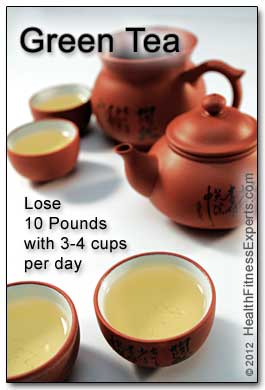
Lose about one pound per month by drinking three to four cups of green tea each day.
You should also note that green tea contains caffeine — about half the amount of black tea and one quarter the amount of coffee.
So if you have trouble sleeping, you should avoid green tea in the afternoon and evening. And note that decaffeinated green tea does not have the same fat burning effects as caffeinated tea. So you need to keep the caffeine!
How Should You Prepare Your Green Tea?
To maximize the fat burning potential and get the most health benefits out of your green tea, you should brew your tea fresh and steep it for at least 3 -5 minutes.
And don’t add any sugar to your tea! Those empty calories will wipe out any weight loss benefits that you’ll get from your tea.
Note that freshly brewed tea has the most benefits. Decaffeinated tea, instant tea, and ready-to-drink bottled tea drinks have less of the healthy antioxidants (catechins) that help you lose weight. And they are usually loaded with sugar.
How Does Green Tea Help You Lose Weight?
So, how does green tea work?
It turns out that green tea contains high levels of naturally occurring compounds called antioxidant polyphenols. Scientists have focused on a particular polyphenol found in green tea: a catechin called epigallocatechin-3-gallate, or EGCG.
The EGCG combined with the caffeine in green tea produces what scientists call diet-induced thermogenesis. This effect boosts your body temperature and your metabolism, forcing your body to work harder and burn calories to cool you down. The green tea ingredients trigger your body to release stored fat into your blood stream where it is converted to energy by your liver and muscles.
Green tea essentially triggers your body to boost your metabolism, melt fat, and burn it. Awesome!
EGCG does much more for you than just burn fat. It will lower your cholesterol, boost your memory, prevent the flu, and much more. Find out more in our article L竞技 .
Boost the Fat Burn: Combine Green Tea With Exercise!
It’s important that you don’t view green tea as a magic bullet that will make you skinny overnight. As we said, on its own, green tea will only help you lose about one pound per month. You also need to make sure that you are eating sensibly and exercising regularly.
As a bonus, you’ll get even more fat burning results from green tea when you combine it with regular exercise. Studies have shown that drinking three to four cups of green tea per day will boost your exercise endurance by causing your body to burn fat instead of carbohydrates during your workouts.
Burning the carbs stored in your muscles causes the buildup of lactic acid which leads to fatigue and sore muscles. But green tea causes your muscles to burn more fat instead of carbs, which delays your fatigue and increases your endurance. And, of course, you are burning and eliminating more fat with every workout!
Is Green Tea Better than Black Tea or Coffee?
If you don’t like green tea, can you get the same benefit from other teas or coffee?
Drinking green tea can help you lose 10 or more pounds each year. That’s much better than gaining a few pounds each year!
Unfortunately, not.
All non-herbal tea comes from the same plant. But unlike oolong or black tea, green tea leaves are not fermented before they are dried. As a result, green tea has much higher concentrations of the catechins that provide weight loss and other benefits. So other teas aren’t nearly as beneficial as green tea.
And coffee also doesn’t work. While some of the fat burning effects are caused by the caffeine in green tea, researchers found that its the combination of the catechins and the caffeine together that cause the weight loss effects. Swiss researchers looking at this issue concluded that “green tea has thermogenic properties… beyond that explained by its caffeine content.” Green tea extracts without caffeine did not work, and neither did caffeine alone.
Do Green Tea Extract Supplements Work, Too?
If you really don’t like green tea or if you don’t have time to brew it, you can actually get the same weight loss benefits from green tea extract supplements. A 2010 study by Oklahoma State University researchers found that both freshly brewed green tea and extract supplements provided the same body weight and BMI (body mass index) reductions.
However, the researchers also found that some other green tea health benefits came only from the freshly brewed tea and not from the supplements.
Research studies show that drinking green tea causes your body to burn fat.
Research Studies Show It Really Works
The Chinese have been drinking green tea for thousands of years. In recent years, it’s become popular all around the world and both eastern and western scientists have done a great deal of research on the health benefits of green tea, including numerous studies confirming that green tea really can help you lose weight.
For example, the 2010 Oklahoma State study mentioned above looked at obese test subjects and concluded that drinking four cups of green tea or taking two extract supplements per day for 8 weeks resulted in “significantly decreased body weight and BMI,” averaging about 5.5 pounds per person.
Looking at obese patients trying to lose weight with exercise, researchers in a 2009 Indiana study found that test subjects who took green tea catechins combined with caffeine (about equivalent to 4 cups of green tea per day) lost more weight than those who took only caffeine. And, the green tea subjects had larger reductions in their stomach fat.
In one of the most cited studies, published in a 2005 issue of The American Journal of Clinical Nutrition, Japanese researchers studied 38 healthy men with varying weights and BMI’s, giving half of them regular oolong tea and half of them oolong tea with added green tea catechins. After 12 weeks, all the men experienced some weight loss, but the subjects who got the green tea catechins had about double the weight loss and double the decrease in BMI and waist circumference. The green tea extracts made a big difference.
Finally, researchers working on the previously mentioned 2010 University of Connecticut study looked at fifteen prior studies that included 1,243 test subjects, and they saw “statistically significant reductions” in body weight, BMI, and waist circumference for subjects that either drank green tea or took supplements with the equivalent amount of green tea catechins and caffeine. Those researchers saw a reduction of about one pound per month.
It should be noted that the UConn researchers thought that the weight loss results were not “clinically relevant” when compared to “pharmacologic weight-loss products on the market.” But we disagree.
As we’ve said, you won’t get dramatic results from green tea. But it can be a very helpful part of any weight-loss plan. And considering the many other health benefits of green tea, losing one pound a month seems like a very nice bonus.
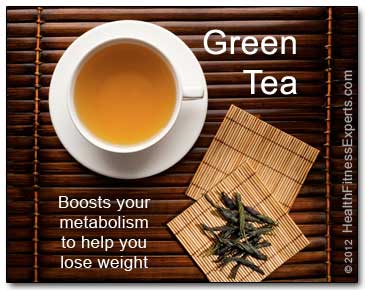
Do you drink green tea? Have you used it to lose weight? Let us know by leaving a comment below!
Green Tea: Drink Up!
So, add green tea to your daily routine. If weight loss is your primary goal, you can go with green tea extract supplements. But since freshly brewed green tea also provides a long list of additional health benefits, we’d suggest skipping the pills and brewing yours fresh. Switching to zero-calorie green tea from other calorie-rich drinks is a double bonus — you eliminate calories in your diet while boosting your metabolism. And you’ll get all the other green tea health benefits, too!
(To see all the reasons that your should be drinking green tea, read our article L竞技 .)
Do you enjoy drinking green tea? What’s your favorite brand? Has it helped you lose or maintain your weight? Leave a comment below and let us know…
References & Sources: (show)(hide)
The post How To Use Green Tea For Weight Loss appeared first on Health & Fitness Experts.
-
Treadmill vs. Elliptical Trainer? Both burn about the same calories. So the best one for YOU depends on your goals. Watch the video above or read the article below to help you decide.
What’s best, an elliptical trainer or a treadmill?
Both burn the same number of calories, so the best workout for YOU depends on your personal fitness and weight loss goals.
Both machines will give you a great workout, but there are some important differences.
In a nutshell, treadmills are a better simulation of real walking or running, while ellipticals feel easier. Ellipticals are also a little easier on your knees and joints.
Let’s take a look at some of the details.
Overview: Choosing Between an Elliptical and a Treadmill
Elliptical vs. Treadmill? They are the two most popular exercise machines and either one will give you a great cardio workout.
But depending on your specific needs and goals, one might be a better choice than the other.
When You Should Choose a Treadmill
When You Should Choose an Elliptical Trainer
What’s the Same: Similarities Between a Treadmill and an Elliptical
Most modern treadmills and ellipticals share a set of similar features.
Electronic Console
Most models include an electronic console to set the length and intensity of your workout.

A treadmill feels more natural. If you’re a runner (or want to be one), the treadmill is the better choice.
Many consoles will track the distance you “travel” and calculate the calories you burn. Many models will also monitor your heart rate. Most also include pre-programmed workouts that vary the duration and intensity of exercise to target your specific fitness goals, such as weight loss, fat burning, or cardiovascular conditioning.
Creature Comforts (Like Cup Holders)
Most models also include amenities such as cup holders and a stand or shelf to hold your magazine or book. With both ellipticals and treadmills, the features you get vary by manufacturer and price — more expensive models from better manufactures will have more bells and whistles than the lower priced models.
An Elliptical or Treadmill Is Great for Your Home Gym
Both elliptical trainers and treadmills make a great addition to your home gym. By enabling you to work out at home, they can really boost help you reach your fitness goals.
While some people prefer the motivation of the gym, it’s certainly more convenient to be able to get a solid cardio workout at home. You don’t have to brave bad weather (too hot or too cold or too wet) to exercise outside or travel to the gym. And you never have to wait for someone else to finish their workout and free up a machine for you to use!
Elliptical Trainer Workouts “Feel” Easier
The difference in the workout — full body for an elliptical vs. only lower body for a treadmill — may be a key reason for another difference: the Rate of Perceived Exertion.
For most people who try both an elliptical trainer and a treadmill, they perceive that the elliptical provides a more effortless workout. They feel the workout is easier or less intense, even though they are actually burning the same number of calories.

An elliptical feels easier, but it burns the same number of calories as a treadmill.
Perhaps sharing the workload with your upper and lower body makes it feel easier. But whatever the reason, the “lower rate of perceived exertion” makes it feel easier and can motivate you to follow through on your workout.
We’ve all heard about “no pain, no gain,” but “less pain, same gain” can be a good motivator.
Treadmills Are More Like Real-World Walking, Hiking, or Running
Although the elliptical machine simulates running or walking, it’s not actually either one. The treadmill is a much closer approximation of real walking, hiking and running.
So if your goal is to get in shape for a 5k, you’ll certainly want the treadmill over the elliptical.
Similarly, if you prefer walking or hiking and you are using the treadmill to replace that exercise during bad weather or challenging schedules, then you’ll want to stick with a treadmill.
Ellipticals Provide Lower-Impact Workouts
Another difference is that ellipticals give you a much lower-impact workout than treadmills.
Treadmills do typically include some cushioning that limits the impact as compared to running outside on concrete or asphalt. But running on a treadmill is still a relatively high-impact activity, and it can be hard on your knees, shins, ankles, back, and joints.
Ellipticals on the other hand were invented specifically to create a low-impact approximation of running. This difference has been born out in many studies. For example, researchers from that University of Mississippi found that ellipticals provide the same cardio workout as treadmills. But they found that ellipticals do it with a much lower impact and strain on joints.
So an elliptical is a good choice if you are recovering from a running injury of if you have other conditions that could be negatively affected by a high-impact workout.
You should note, however, that while the high-impact of the treadmill might be tough on your joints, such activities do help to promote better bone health and have been shown to help protect against osteoporosis. The elliptical trainer is a weight-bearing exercise, so it will also promote healthy bones much more than other cardio exercise such as swimming or biking. But the constant pounding of the treadmill will do it a bit better.
Space and Noise: Elliptical vs Treadmill
If you are considering one of these machines for you home, you need to make sure you have space for it! They are big machines and can easily take up as much space as dining room table or a good sized sofa.
If space is a problem, many treadmills fold when not in use. Of course, you’ll still need the full amount of space to work out. But when you are done, you can fold up the ramp and save some space. Ellipticals typically do not come in folding models.
If noise is an issue, ellipticals are usually a little quieter than treadmills because they don’t have an electric motor. But the noise of either machine depends a lot on the manufacturer and the model. So you should try one out before you buy it and make sure the noise level is acceptable.
Treadmill vs. Elliptical: Which Cost Less
There is a wide range of pricing for both treadmills and ellipticals. You can get cheap treadmills and cheap elliptical trainers, or you can spend a small fortune. But like you’ve heard before, you usually get what you pay for.
Consumer Reports took a look at both elliptical machines and treadmills and found that you need to spend at least $2,000 to get a quality machine that will hold up to serious workouts. Cheaper machines feel flimsy and shaky and are much more prone to defects and breakdown. While these issues might be covered by warranties, you will likely waste a lot of time and energy tracking down the manufacturer and coordinating the repairs. And once the warranty expires, you are out of luck.
Once you hit the $2,000 range, any quality treadmill or elliptical from a good manufacturer will serve you equally well. So price should not be a consideration when deciding between these two types of machines.
The one exception is for walkers. If you plan to walk on your treadmill instead of running, then it’s OK to buy one of the cheaper treadmills. You won’t give it as much of a beating and the flimsy, shaky feel of lesser models will be minimized if you are only walking. Just make sure that you are happy to stick with walking. If you plan to start walking but then move up to running, you should get started with a better model that will work well for both activities.
Choose the One You’ll Use!
In the end, perhaps the most important factor in deciding on an elliptical vs a treadmill is thinking about which one will motivate you the most.

Treadmill vs. elliptical? Both burn the same calories. So choose the one you’ll use. For non-runners, an elliptical is usually a better choice because it feels easier.
The more you use it and the harder you work out, the better the results. If you work out equally hard on either machine, you’ll get the same fitness benefits.
If you are a runner (or want to become one), you’ll probably prefer the treadmill. But otherwise, the elliptical may be a better choice because it feels easier and works both your lower and upper body.
Remember, if you don’t go to the gym, or if your home gym elliptical or treadmill sits in the corner gathering dust, then it doesn’t matter which one you choose. So choose the one you’ll use!
Do you prefer a treadmill or an elliptical trainer? Have you had a great (or bad) experience with one or the other? Leave a comment below and share your insights.
References & Sources: (show)(hide)
The post Elliptical vs. Treadmill: Which is Best? appeared first on Health & Fitness Experts.


